Bateke / Bakongo Drum (Bateke and Bakongo, Democratic Republic of the Congo / Republic of the Congo)
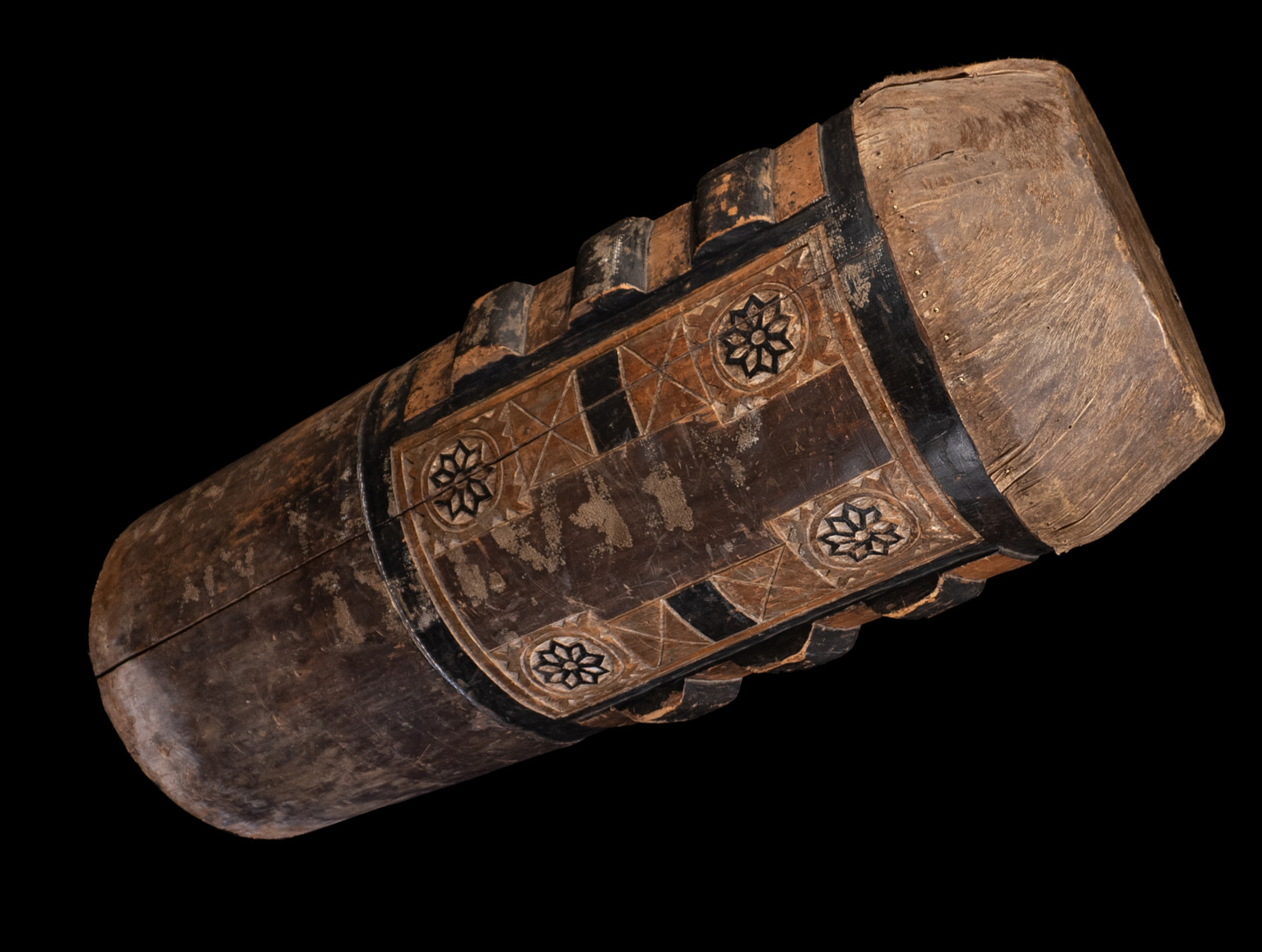
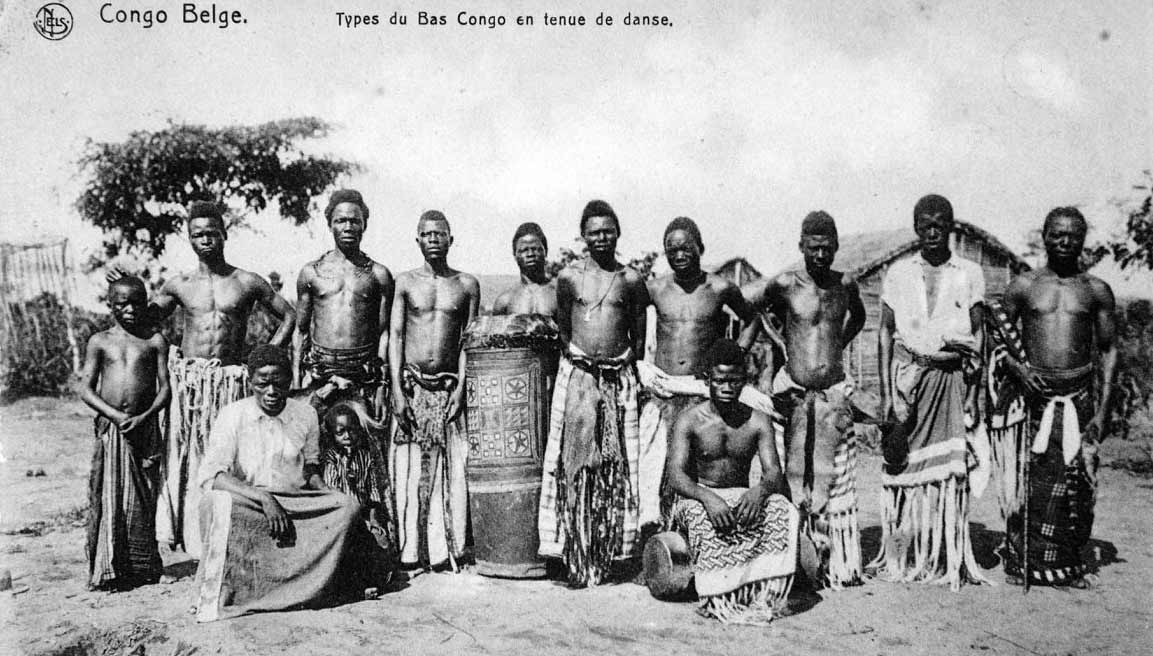
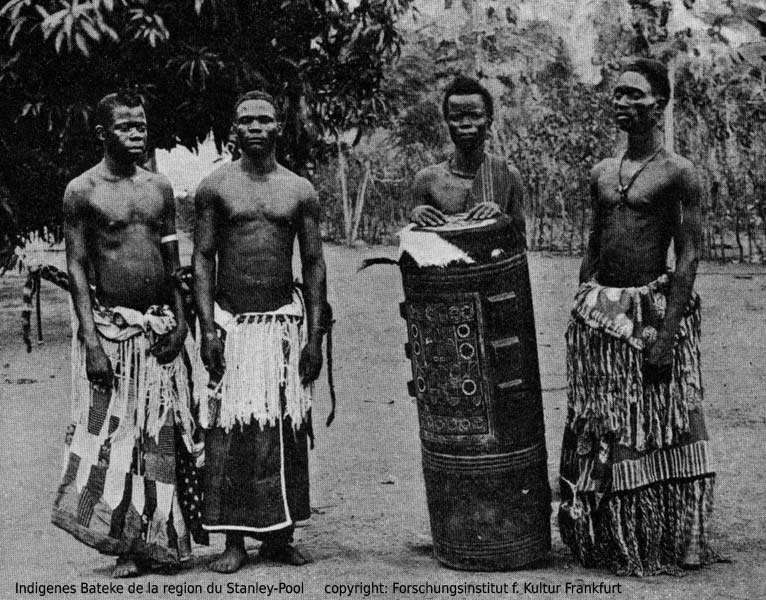
This ceremonial drum originates from the cultural traditions of the Bateke and Bakongo peoples of Central Africa. Throughout the Congo Basin, drums have long occupied a central position in social, political, and religious life, functioning not only as musical instruments but also as powerful media of communication and symbols of authority. Among both the Bateke and the Bakongo, ceremonial drums accompanied important public events and expressed the relationship between political leadership, ancestral traditions, and communal identity.
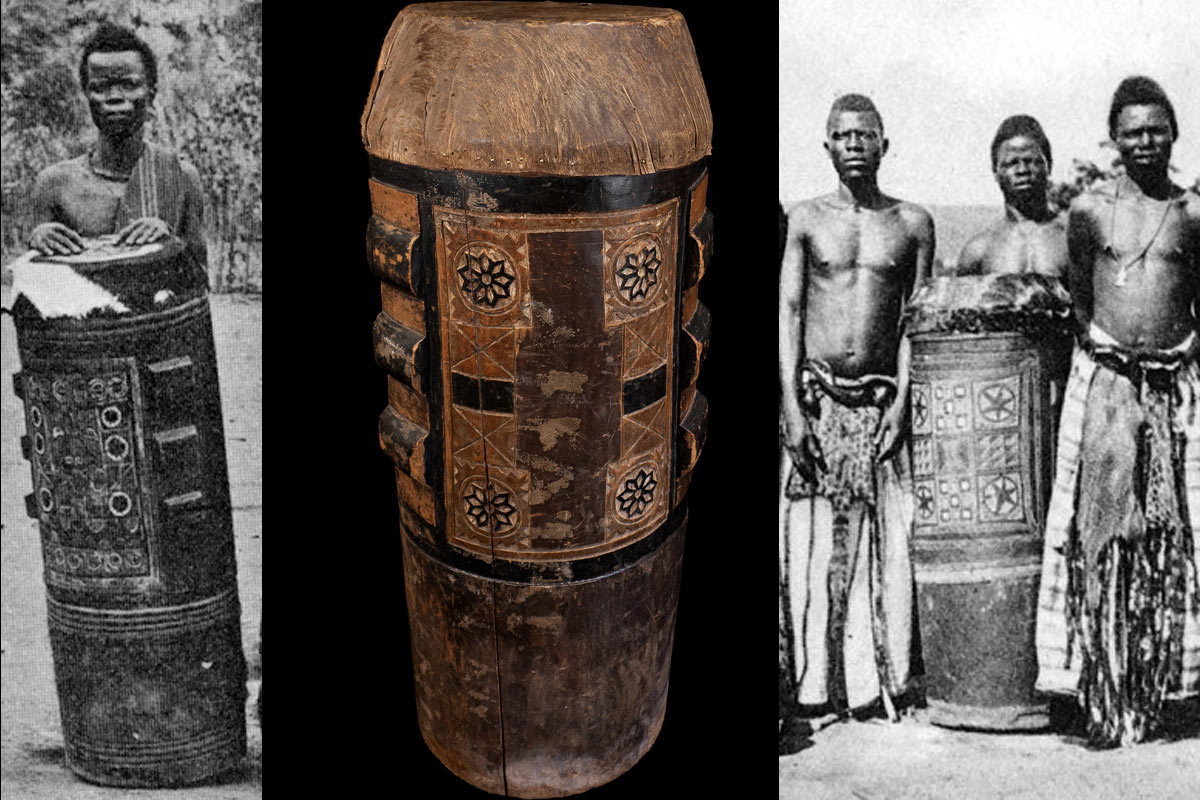
The instrument is a tall, single-headed wooden membranophone measuring approximately 107 cm in height. Carved from a single tree trunk, its elegant cylindrical form produces a deep, resonant tone well suited to outdoor ceremonial performances. Like many Central African court drums, the membrane is secured by wooden pegs fastened around the rim, while the carefully proportioned body reflects the refined woodworking traditions characteristic of the region.
Historically, drums of this type were sounded during ceremonies honouring rulers, chiefs, and other distinguished members of society. They also accompanied funerary rites and rituals associated with ancestor veneration, where their resonant sound emphasized the solemnity of the occasion and symbolized continuity between the living and the ancestral world. In these contexts, the drum served as an audible emblem of prestige, political legitimacy, and spiritual authority rather than simply providing musical accompaniment.
During the twentieth century, colonial administration, Christian missionary activity, urbanization, and changing political structures transformed many traditional ceremonial practices throughout Central Africa. As a result, numerous royal and ritual drums gradually lost their original ceremonial functions. Today, comparable instruments are primarily performed during cultural festivals, official celebrations, state receptions, and heritage events, where they continue to represent the historical identity of the Bateke and Bakongo peoples while preserving important elements of their musical traditions.
Beyond their musical significance, ceremonial drums constitute important works of African material culture. Their carefully balanced proportions, skilled craftsmanship, and symbolic role within society illustrate the close relationship between music, sculpture, political power, and ritual practice that characterizes many Central African cultures.
Sources
"The drum occupies an important place in the political and ceremonial life of many Central African societies, where it serves not merely as a musical instrument but also as an emblem of authority and social prestige."
Summarized from Olga Boone, Les tambours du Congo Belge et du Ruanda-Urundi. Tervuren, 1951.
"Kongo ceremonial objects reveal the close relationship between artistic expression, political authority and religious belief."
Robert Farris Thompson. The Four Moments of the Sun: Kongo Art in Two Worlds. 1981.
Bibliography
Boone, Olga.
Les tambours du Congo Belge et du Ruanda-Urundi. 2 vols. Tervuren: Annales du Musée du Congo Belge, 1951.
Chauvet, Stephen.
Musique Nègre. Paris, 1929.
Gansemans, Jos.
Les instruments de musique Luba. Tervuren, 1980.
Laurenty, J. S.
Les membranophones des Luba-Shankadi. Tervuren, 1972.
Maes, Joseph.
Sculpture décorative ou symbolique des instruments de musique du Congo Belge. Brussels, 1937.
Söderberg, Bertil.
Les instruments de musique au Bas-Congo et dans les régions avoisinantes. Stockholm, 1956.
Thompson, Robert Farris.
The Four Moments of the Sun: Kongo Art in Two Worlds. Washington, 1981.
Wieschhoff, Heinz.
Die afrikanischen Trommeln und ihre außerafrikanischen Beziehungen. Stuttgart, 1933.