Africa
Timba Drum (Baga, Guinea)
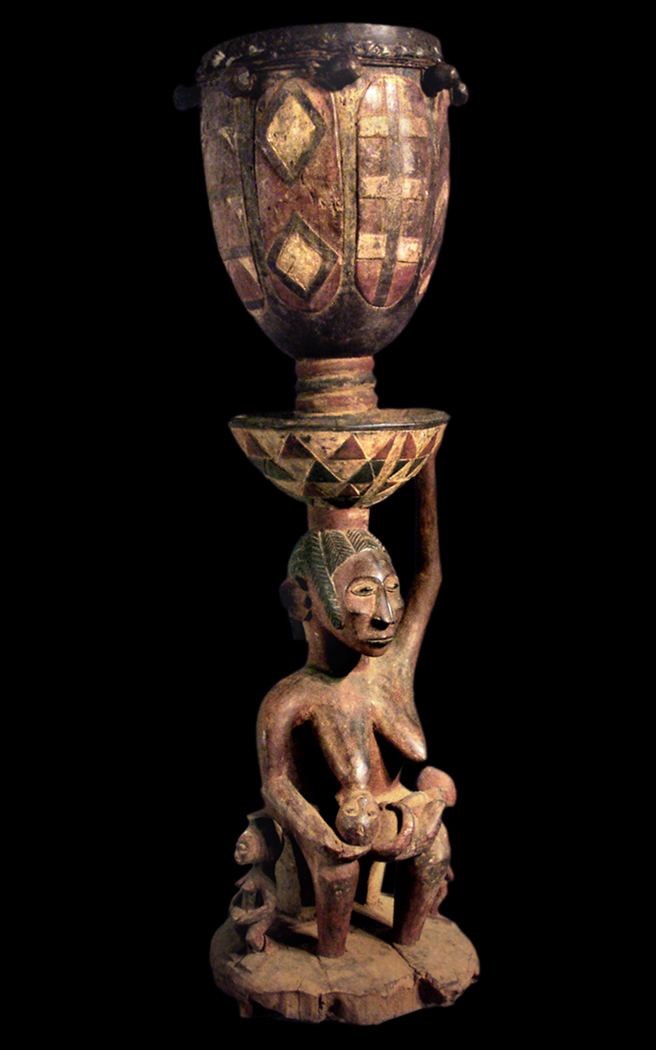
Timba Drum (Baga, Guinea)
Among the musical instruments of the Baga people of coastal Guinea, the timba occupies a particularly important position. It is the largest drum within the Baga musical tradition and was associated with some of the most significant ceremonies in community life. Its use extended beyond musical performance and was closely connected with initiation, ancestor veneration, and the transmission of cultural knowledge.
The right to perform on the timba was restricted to men. According to Frederick Lamp, the instrument was primarily used during the kä-bere-Tshol initiation ceremonies, in which young boys were introduced to the python spirit known as a Mantsho-nga-Tshol. The drum was also performed during weddings, the funerals of male elders, and sacrificial ceremonies dedicated to the ancestors, particularly after the harvest.
From an organological perspective, the timba is a large single-headed membranophone with a barrel-shaped drum body. It was frequently played while positioned on a stool or an inverted mortar. The painted decoration consists of geometric motifs, including circles, zigzag patterns, and diamond-shaped elements that create a highly structured surface.
The most remarkable feature of the present example is its sculptural support. The drum rests upon a figurative representation of a seated nursing mother accompanied by two smaller figures. Such compositions reflect the close relationship between sculpture and musical instruments within Baga artistic traditions and emphasize the symbolic importance of fertility, family, and social continuity.
The timba illustrates the central role of music within Baga initiation practices and demonstrates how musical instruments functioned as carriers of both ritual knowledge and cultural identity.
"One of the most important objects was the drum, that all the Baga groups, as well as the Landuma, Nalu, Pukur, and Bulunits, call the timba. The right to use these immense drums was restricted: they were played by men only. Their principal use was in the dances of the kä-bere-Tshol initiation, but they were also played at weddings, the funerals of male elders, and sacrifices to the ancestors, especially after the harvest."
Lamp, Frederick: Art of the Baga: A Drama of Cultural Invention. New York, Museum for African Art, 1996, p. 120.