Kavango Drum / Mbukushu – Namibia / Botswana
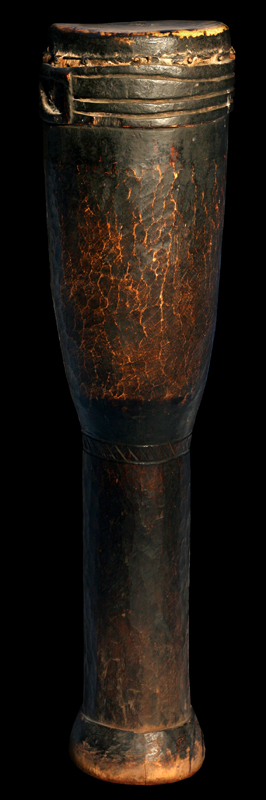
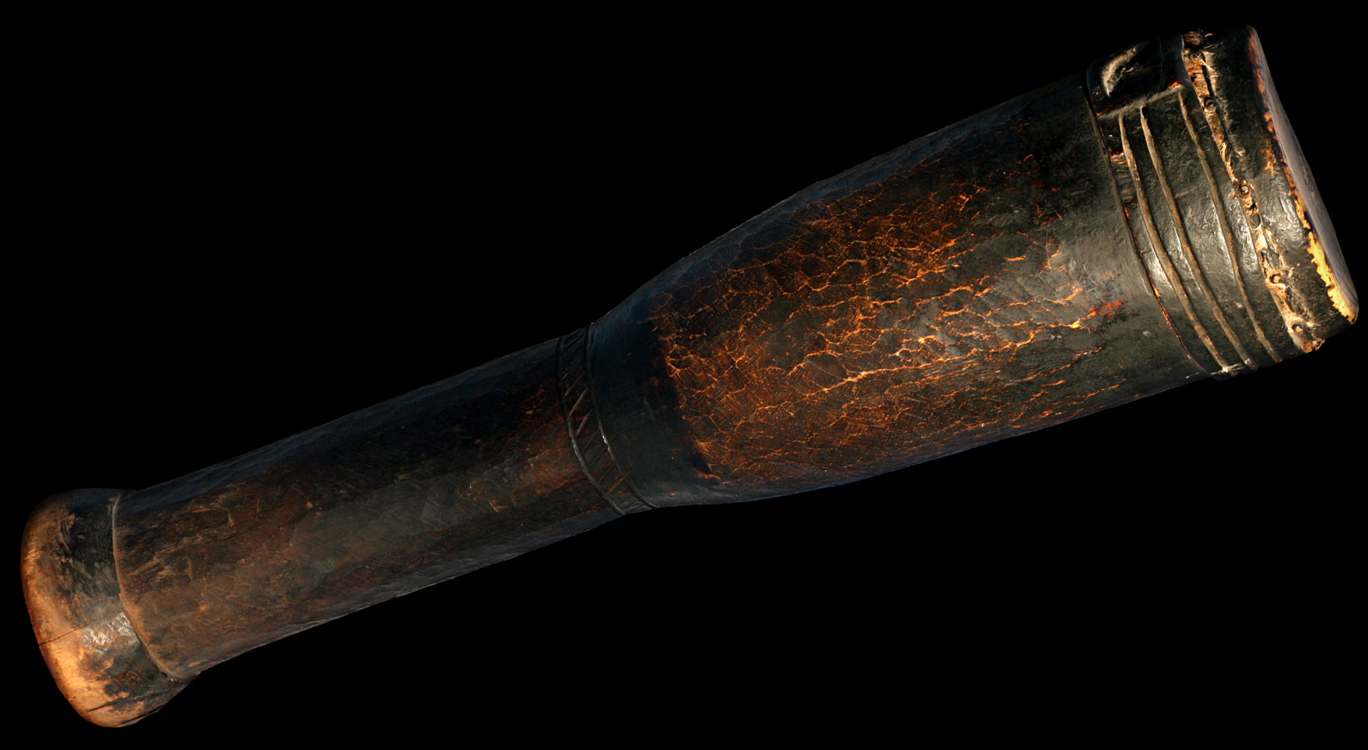

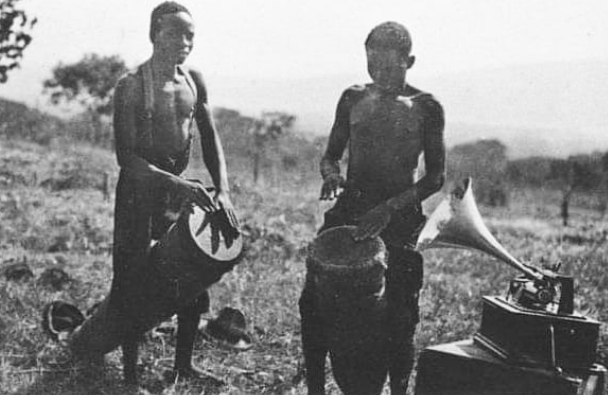
The Mbukushu, also known as Hambukushu, are one of the peoples of the Kavango region, with communities living in present-day Namibia, Botswana, Angola and Zambia. Drumming forms an important part of Kavango musical traditions and is closely connected with communal singing, dancing and celebration. The drum is not normally conceived as an independent instrument, but as part of an ensemble in which several players contribute complementary rhythmic patterns.
Dave Dargie's research documents a traditional ensemble of usually three drums. The largest is known as kurugoma, the smallest as mundindi, and the intermediate drum as nkinzo. Their musical relationship is more important than the individual instrument: each drummer maintains a distinct rhythmic pattern while contributing to a combined structure. The resulting music is based on the simultaneous interaction of different rhythmic cycles.
A characteristic feature of Kavango drumming is the use of cross-rhythm and additive rhythm. Dargie describes performances in which the individual drums act independently while producing a unified rhythmic pattern. The mundindi, for example, may establish a leading pattern while another drum plays across it in a contrasting rhythmic division. Such performances require a precise sense of the underlying pulse and a highly developed ability to maintain one's own part within the collective rhythm.
Drumming is closely associated with dance and communal entertainment. Dargie describes performances in which men and boys played drums and other rhythm instruments while people took turns dancing in an open space, accompanied by singing and hand-clapping. During larger celebrations the normal three-drum group could be expanded by additional instruments. The size and intensity of the ensemble could therefore respond to the character of the occasion.
The musical tradition has also continued to develop. Dargie distinguishes traditional Kavango songs from newer forms while demonstrating that important principles of traditional drumming, including cross-rhythm and the interaction of contrasting rhythmic patterns, continued to be used in neo-Kavango music. The drum ensemble thus represents not a fixed historical repertoire but a continuing system of musical knowledge capable of adapting to changing forms of performance.
The present drum is therefore best understood through its relationship to the ensemble for which it was made. Its significance lies in the rhythmic dialogue between individual players, in the connection of drumming with dance and communal celebration, and in the transmission of musical knowledge through performance. As a surviving example of Mbukushu material culture, it represents a tradition in which the drum derives its full musical identity from the collective structure of the ensemble.
"The tallest drum is called kurugoma (kuru meaning large), the smallest mundindi (meaning small), and the middle drum nkinzo."
Dave Dargie: Kavango Music. African Music: Journal of the International Library of African Music, Vol. 9, No. 3, 2013, pp. 122–150.
"The drumming in both the neo-Kavango and traditional songs used cross rhythms and additive rhythms in patterns in which the set of (usually three) drums acted individually while producing combined patterns."
Dave Dargie: Kavango Music. African Music: Journal of the International Library of African Music, Vol. 9, No. 3, 2013, pp. 122–150.
Bibliography:
Dargie, Dave: Kavango Music. African Music: Journal of the International Library of African Music, Vol. 9, No. 3, 2013, pp. 122–150.
Larson, Thomas J.: Musical Instruments of the Hambukushu. South African Journal of Ethnology, Vol. 8, No. 1, 1985, pp. 5–11.
Norborg, Åke: A Handbook of Musical and Other Sound-producing Instruments from Namibia and Botswana. Musikhistoriska Museet, Stockholm, 1987.
Dargie, Dave: Xhosa Music. Cape Town: David Philip, 1988.
Bebey, Francis: African Music: A People's Art. New York: Lawrence Hill, 1975.
Dagan, Esther A. (ed.): Drums: The Heartbeat of Africa. Galerie Amrad, 1993.
Wieschhoff, Heinz: Die afrikanischen Trommeln und ihre außerafrikanischen Beziehungen. Stuttgart, 1933.