Double-headed Drum West Africa
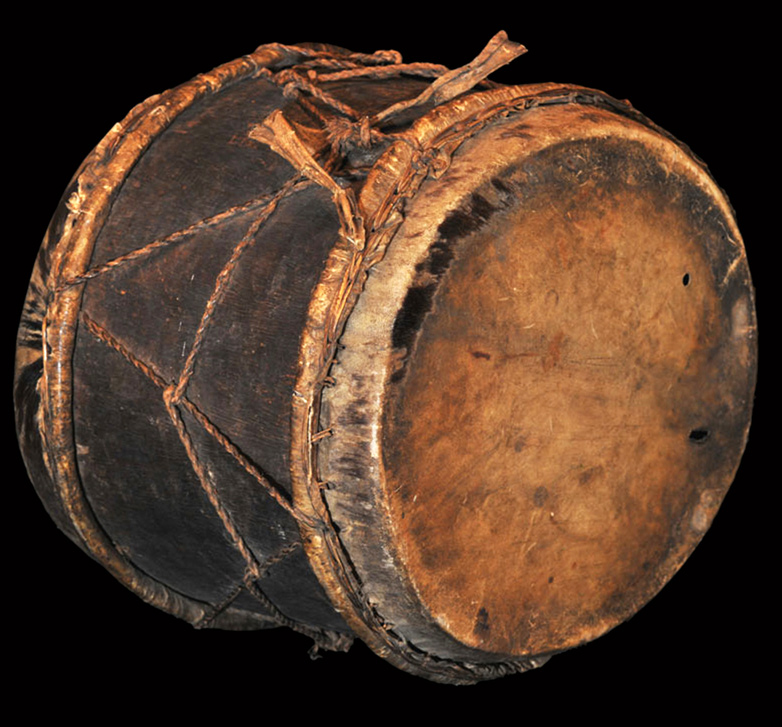
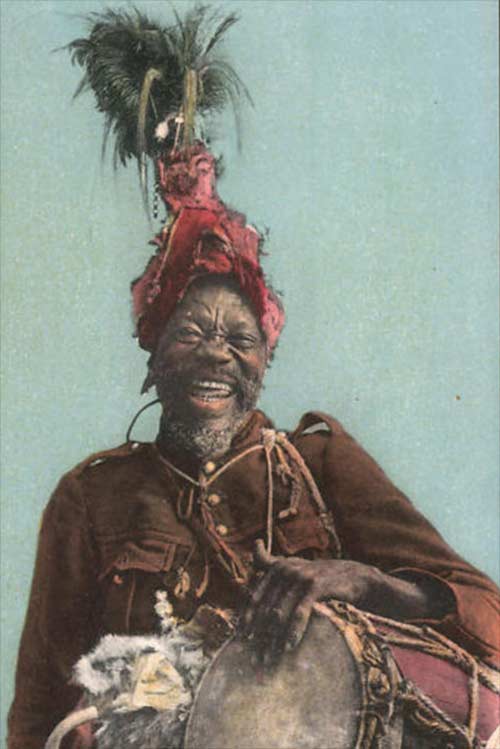
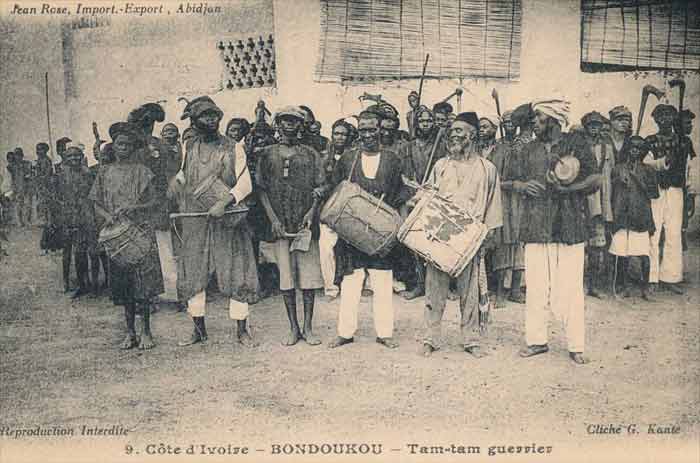
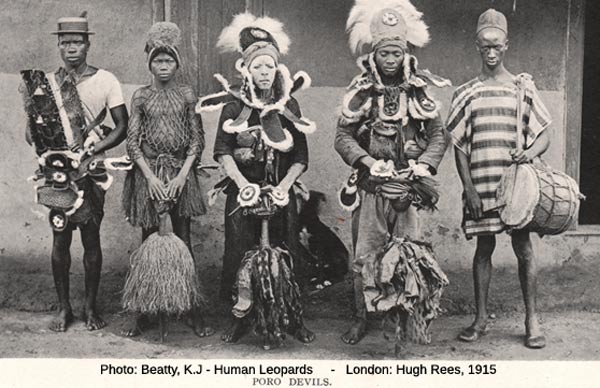
Double-headed Bass Drum (West Africa, probably Kpelle)
This double-headed drum represents a widespread type of bass drum found in the musical traditions of West Africa. The exact regional attribution of the present example is uncertain, although its provenance has been associated with the Kpelle region of Liberia and Guinea. Comparable drums occur under different names and in different musical contexts across the wider region.
The drum has a relatively short cylindrical wooden body with two animal-skin membranes tensioned against the opposite ends. The skins are secured and tensioned by a traditional system of ropes running between the two heads. The worn surfaces and repaired bindings indicate prolonged practical use. Its construction is primarily functional and designed to produce a strong, low-pitched rhythmic foundation.
Double-headed drums of this type are commonly used to support dance, praise-singing, ceremonial performances and other forms of communal music. Depending on local tradition, they may be played with the hands, with sticks, or with a combination of both techniques. Their deep tone provides the lower rhythmic layer within an ensemble, against which smaller drums, rattles, bells or other instruments articulate more complex patterns.
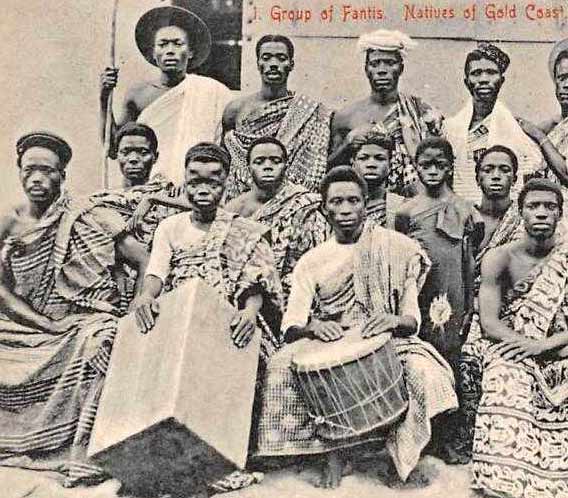
The historical photographs accompanying the instrument illustrate the broad distribution and varied use of this drum type in West Africa. Comparable double-headed drums can be seen in performances from Liberia and Guinea as well as in historical photographs from Côte d'Ivoire and the Gold Coast. The instruments appear in both secular and ceremonial settings, demonstrating that their musical function extended across different forms of social performance.
The present drum is therefore best understood not as a highly specialized regional type but as an example of a widely established West African drumming tradition. Its importance lies in its practical musical function: the deep and sustained sound of the two membranes provides the rhythmic foundation upon which ensemble performance, dance and song can develop.
Bibliography:Stone, Ruth M.: Let the Inside Be Sweet: The Interpretation of Music Event among the Kpelle of Liberia. Bloomington: Indiana University Press, 1982.
Stone, Ruth M.: Dried Millet Breaking: Time, Words, and Song in the Woi Epic of the Kpelle. Bloomington: Indiana University Press, 1988.
Stone, Ruth & Verlon Stone: Music of the Kpelle of Liberia. Folkways Records, 1972.
Westermann, Diedrich: The Kpelle: A Negro Tribe in Liberia. Göttingen, 1921.
Brincard, Marie-Thérèse (ed.): Sounding Forms – African Musical Instruments. New York, 1989.
Dagan, Esther A.: Drums: The Heartbeat of Africa. Galerie Amrad, 1993.
Meyer, Andreas: Afrikanische Trommeln – West- und Zentralafrika. Staatliche Museen Preußischer Kulturbesitz, Berlin, 1997.
Wieschhoff, Heinz: Die afrikanischen Trommeln und ihre außerafrikanischen Beziehungen. Stuttgart, 1933.