Africa
Lemba drum Bakongo
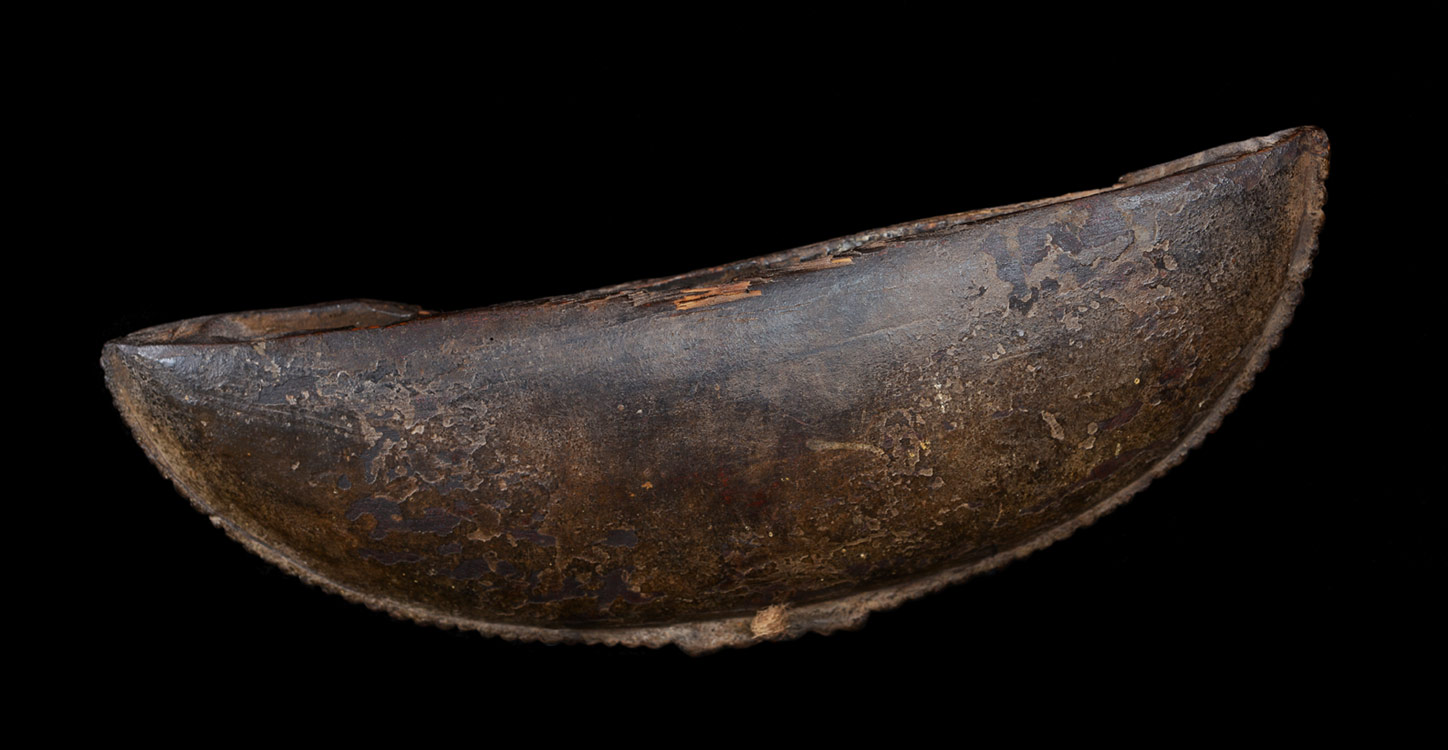
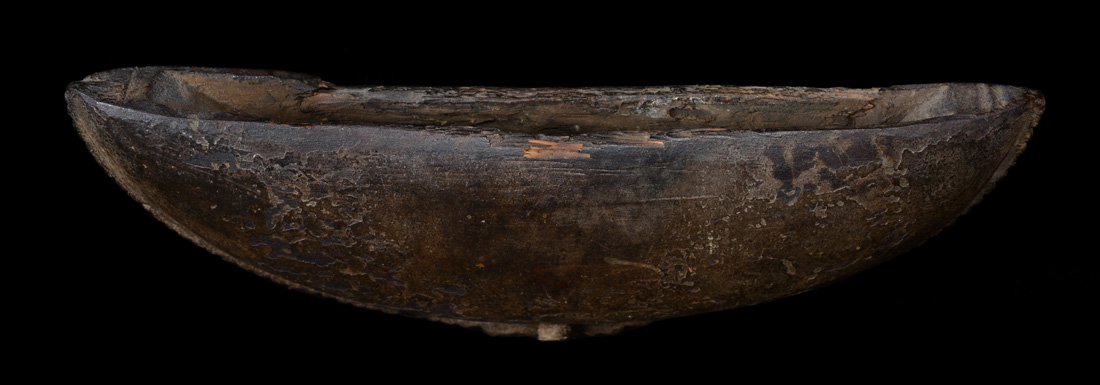
Spirit Drum “nkonko di Lemba” (Bakongo, possibly Woyo, Democratic Republic of the Congo)
Marc Leo Felix, the founder and director of Congo Arts, a gallery specializing in thematic exhibitions on Central African ritual arts and crafts, explained:
“This diviner´s gong is not old, it is ancient and could be even older than we think, it might be centuries old – not only because the wood is totally demineralized and dessicated but also because of the numerous overlapping layers of patina which, on an object of this kind take literally centuries to build up. The strictness of the design is also witness to its antiquity.”
His assessment is especially significant because it refers directly to the present object, which was acquired from him.
Provenance:Old Missionary Collection
Marc Leo Felix
The instrument is associated with the Lemba tradition of the Bakongo cultural sphere of Central Africa. Lemba was an influential institution concerned with initiation, healing, spiritual authority, and the transmission of specialized knowledge. Within this ceremonial context, the nkonko was not simply a musical instrument but an object closely connected with ritual authority and the communication of spiritual power.
Particularly significant is the relationship between the nkonko and the Lemba priest or nganga. The drum could accompany the priest during his role as initiator and was an essential part of the Lemba initiation ceremony.
“The nkonko was used in the Lower Congo during the lemba cult, by the master-cutter in the nkanda circumcision ceremony, by the healer or nganga who plays it during the healing ritual, and also during the ceremonies of secret societies. In addition, one observer notes that this drum is played as an accompaniment to the circle dancing by the women of Mayombe; possibly a ritual. He says that the small slit-drum is attached to the back, on the hips of each dancer and is played with a stick by the woman who follows in the dance.”
Excerpt from: © KMMA, Royal Museum for Central Africa, Music in Africa, http://music.africamuseum.be
“A nganga Lemba (priest of Lemba) would play such a nkonko while performing his role as grand initiator in the Lemba rite. It is said that the number of nkonko at a given ceremony depends on how many persons are being initiated. Each initiate is accompanied by his personal initiator, and none can enter the Lemba circle without a nkonko to strike.”
Excerpt from: Robert Farris Thompson, Body and Voice: Kongo Figurative Musical Instruments.
“Numerous texts speak of the ancestors or mythic heroes being "in" the drums, or of them "speaking" through the drums, or of Lemba being "drummed up" by the Lemba father or chief priest The drum of Lemba whether nkonzi, nkonko or ngoma was frequently copied in miniature, the cavity being filled with plant substance (the "powers" above) to retain or conjure a spell (ndokolo). Such a process of representing a representation, or metaphorizing a metaphor, may permissibly be termed fetishization. The miniature drums of Lemba were either hung on statues, or carried about on one's body as a charm. On Woyo pot-lids illustrating proverbs, Lemba was represented by the drum motif.”
Excerpt from: Janzen, John M. (1982): Lemba, 1650–1930: A Drum of Affliction in Africa and the New World. p. 256–257.
BibliographyThompson, Robert Farris (1989): Body and Voice – Kongo Figurative Musical Instruments. In: Marie-Thérèse Brincard (ed.), Sounding Forms – African Musical Instruments.
Janzen, John M. (1982): Lemba, 1650–1930: A Drum of Affliction in Africa and the New World.
Bastían, A. (1874): Die Deutsche Expedition an der Loango-Küste. 2 vols.
MacGaffey, Wyatt (1970): The Religious Commissions of the BaKongo.
Stanley, Henry Morton (1877): Through the Dark Continent.
Dapper, Olfert (1670): Umständliche und Eigentliche Beschreibung von Afrika.
Lehuard, Raoul (1977): Les Phemba du Mayombe.
Bastian, Adolf (1874): Die deutsche Expedition an der Loango-Küste, nebst älteren Nachrichten über die zu erforschenden Länder.
Stenström, O. (1969): The Lemba Cult. Ethnos.