Luba (Baluba) ceremonial drum (Democratic Republic of the Congo)
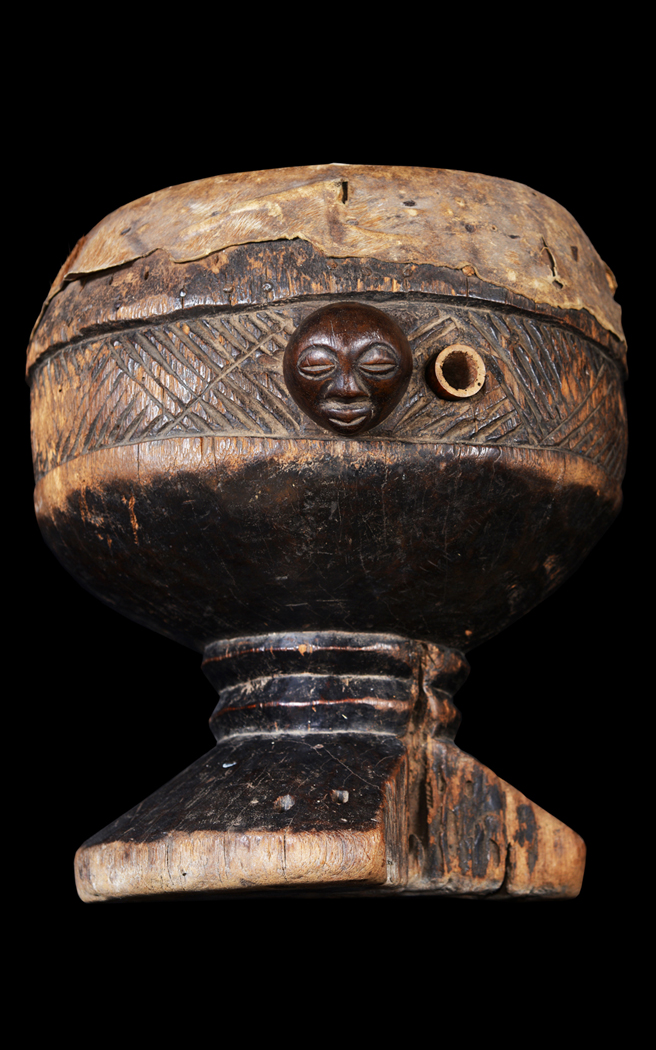
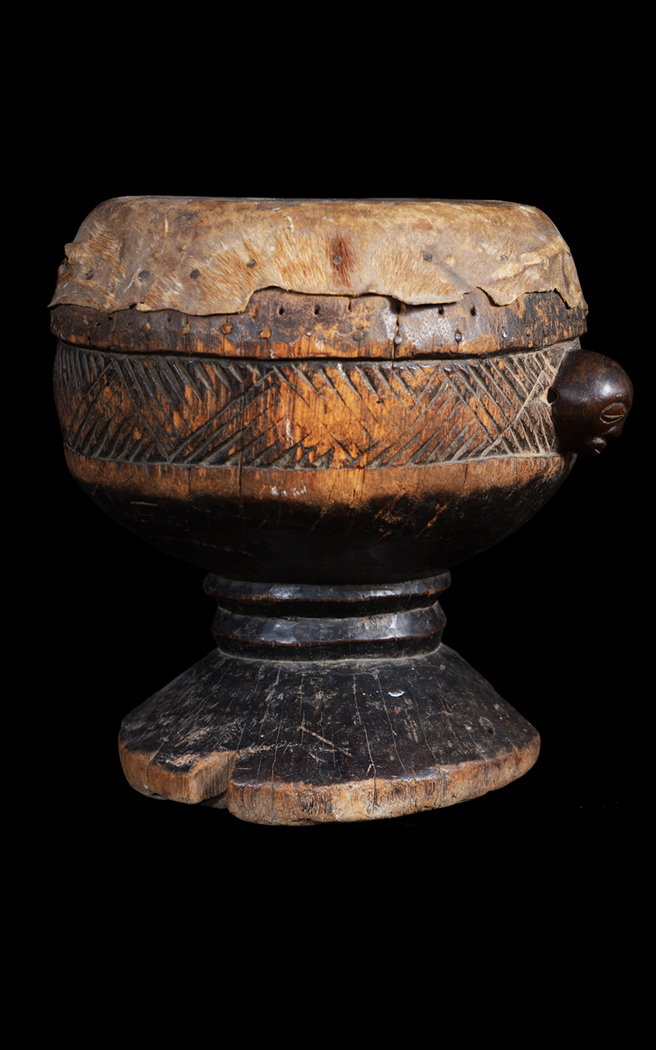
Luba (Baluba) ceremonial drum / Ngoma / Tambour
Democratic Republic of the Congo
The ceremonial drums (
Ngoma) of the Luba Kingdom belong among the finest achievements of Central African court art. More than musical instruments, they functioned as symbols of kingship, political authority and dynastic continuity while simultaneously representing masterpieces of African woodcarving. Their harmonious proportions, anthropomorphic sculpture and refined geometric ornamentation reflect the exceptional artistic traditions that flourished in the royal workshops of the Luba Empire between the sixteenth and nineteenth centuries.
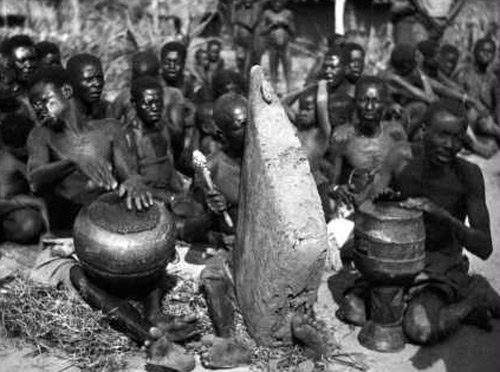
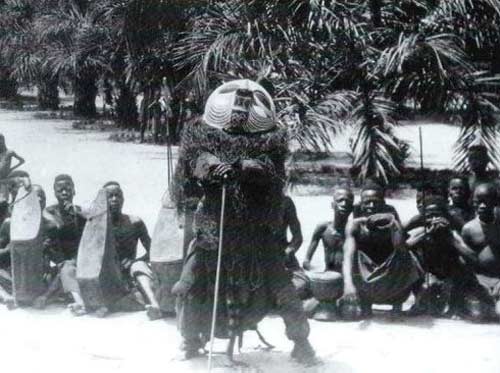
Music occupied a central position in Luba court life. Royal drums accompanied investitures, public audiences, state ceremonies and funerary rituals of kings and high-ranking dignitaries, where their sound proclaimed the presence and authority of the ruler. Historical photographs further document the use of
Ngoma in ensembles together with large trapezoidal slit drums, illustrating the complementary performance of membranophones and idiophones within ceremonial music.
Many surviving Luba drums are remarkable for their sculptural quality. Carefully carved masks, balanced pedestal forms and elegant decorative patterns transformed these instruments into prestigious court objects that united visual symbolism with musical function. Their artistic influence extended beyond the Luba Kingdom to neighbouring cultures such as the Lunda, Hemba and Songye. Today, Luba ceremonial drums are regarded as outstanding examples of African royal art and are preserved in many of the world's leading ethnographic and art museums.
One of the most distinctive acoustic features of many Luba drums is the mirliton, a secondary vibrating membrane that transforms the sound of the instrument. Rather than producing a pure drum tone, the mirliton adds a characteristic buzzing resonance that is highly valued throughout Central Africa.
A small opening is carved into the side of the wooden drum body and fitted with a short tube, often made from the neck of a calabash. This opening is covered with an extremely thin membrane traditionally made from the parchment-like cocoon of a spider or from another delicate natural membrane, which is sealed in place with beeswax. The membrane does not produce sound on its own but vibrates sympathetically with the air pressure created inside the drum when the main drumhead is struck.
The result is a rich, textured timbre rather than a dry percussive tone. The buzzing overtone increases the projection of the instrument and allows its sound to remain clearly audible during outdoor ceremonies, dances and large ensemble performances. In Luba musical aesthetics, this resonant quality is not regarded as an imperfection but as an essential part of the drum's voice.
Source
"From the artistic point of view the Baluba, especially those from Kabongo, have developed artistic skills to a high degree. Their artists excel in the practice of the plastic arts. Wood and clay are the basic material. They fashion statuettes (Nkinsi) and big masks (Kifwebe), headrests (Musamo) and arrow holders. They use different musical instruments that are made from wood: drums (Ngoma), xylophones (Mandimba), wood gongs (Kyondo). These instruments harmonise the melodies for social entertainment."
Jos Gansemans, Les instruments de musique des Kongo et des zones d'influence. Musée Royal de l'Afrique Centrale, Tervuren, 1978, pp. 59–68.
Literature
Gansemans, Jos (1978). Les instruments de musique des Kongo et des zones d'influence. Tervuren: Musée Royal de l'Afrique Centrale.
Maesen, Albert (1967). Musique et instruments de musique des Luba. Tervuren: Musée Royal de l'Afrique Centrale.
Reefe, Thomas Q. (1981). The Rainbow and the Kings: A History of the Luba Empire to 1891. Berkeley: University of California Press.
Roberts, Allen F. & Roberts, Mary Nooter (1996). Memory: Luba Art and the Making of History. New York: Museum for African Art / Prestel.
References:
Boone, Olga : Les tambours du Congo Belge et du Ruanda-Urundi. 2Vol.1951. Tervuren : Annales du Musée du Congo Belge; Ethnographie 1
Brincard, M.T. : Sounding Forms – African Musical Instruments 1989
Chauvet, Dr. Stephen : Musique Nègre. 1929
Dagan , Esther A. : Drums - The Heartbeat of Africa. Galerie Amrad 1993
Gansemans, Jos : Les instruments de musique Luba. 1980
Laurenty, J.S. : Les membranophones des Luba-Shankadi. 1972
Maes, Joseph : Sculpture decorative ou symbolique des instruments de musique du Congo Belge. 1937
Meyer, Andreas : Afrikanische Trommeln – West- und Zentralafrika. Staatliche Museen Preußischer Kulturbesitz, Berlin 1997
Söderberg, Bertil : Les instruments de musique au Bas-Congo et dans les régions avoisinantes. Stockholm 1956
Thompson, Robert Farris : The four moments of the sun - Kongo art in two worlds. 1981
Wieschhoff, Heinz : Die afrikanischen Trommeln und ihre außerafrikanischen Beziehungen. Stuttgart 1933