Mangbetu Slit Drum Democratic Republic of the Congo
Mangbetu Slit Drum / Schlitztrommel / Tambour à fente – Democratic Republic of the Congo
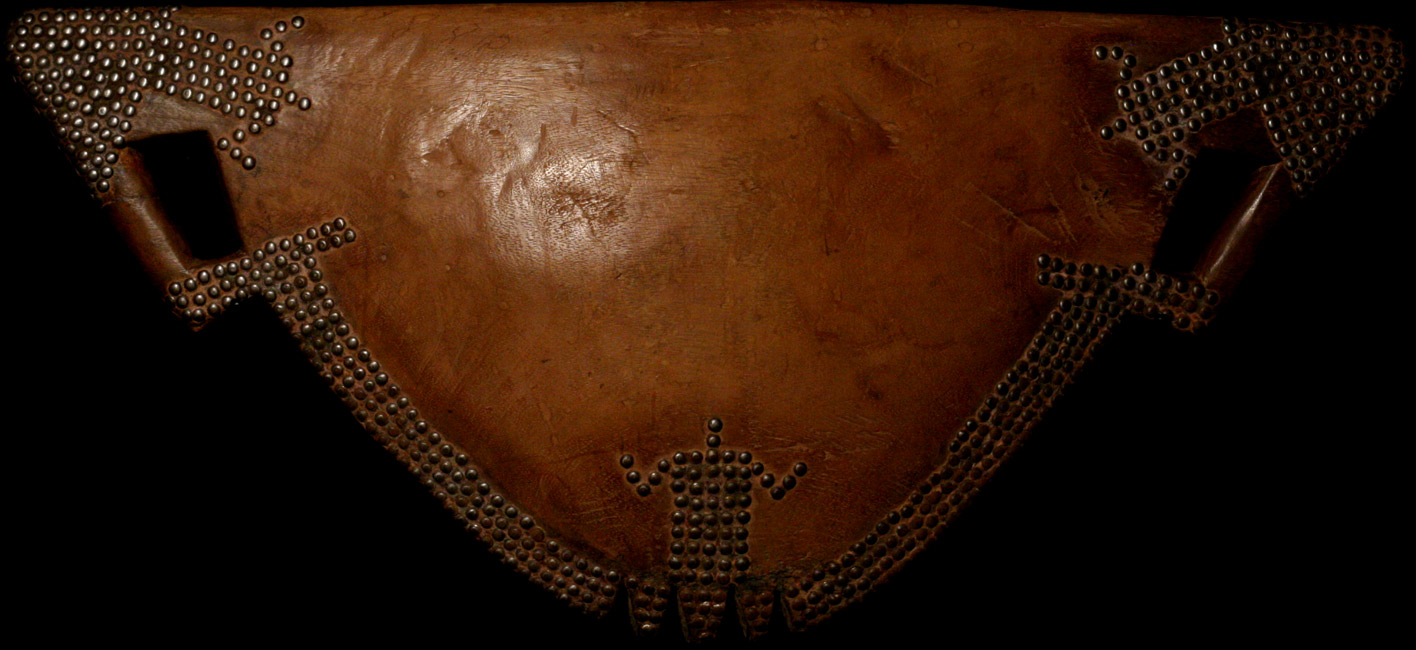
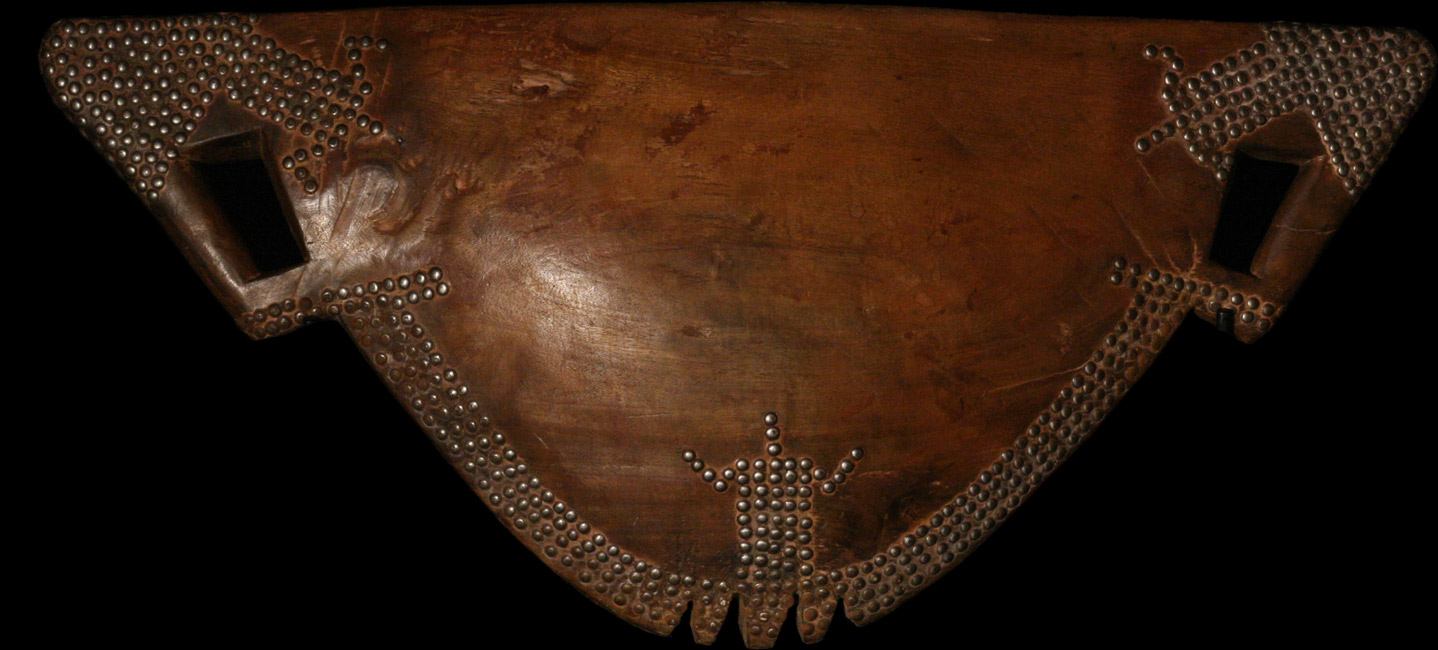
The Mangbetu slit drum is among the most remarkable musical instruments of Central Africa. Carved from a single piece of wood, it combines musical function with exceptional artistic refinement and reflects the highly developed court culture of the Mangbetu kingdoms in northeastern Congo.
Known as nedungu, this type of slit drum served primarily as a ceremonial signal instrument within royal courts. Its powerful sound announced important events, accompanied official receptions, and reinforced the authority of rulers during public ceremonies and festive gatherings. Similar instruments were also used by neighboring peoples, including the Zande and Mamvu.
Unlike membrane drums, the Mangbetu slit drum belongs to the family of idiophones. Sound is produced by two resonating tongues created through a longitudinal opening carved into the wooden body. The distinctive triangular or tulip-shaped form, elegantly widening toward the upper section, represents one of the most characteristic instrument designs of the Uele region.
The instrument displayed here is decorated with hundreds of carefully arranged metal tacks forming geometric patterns that emphasize its symmetrical composition. This decorative technique reflects the extraordinary aesthetic sophistication for which Mangbetu art became internationally renowned. Similar ornamental principles can be observed in Mangbetu sculpture, pottery, furniture, and court objects.
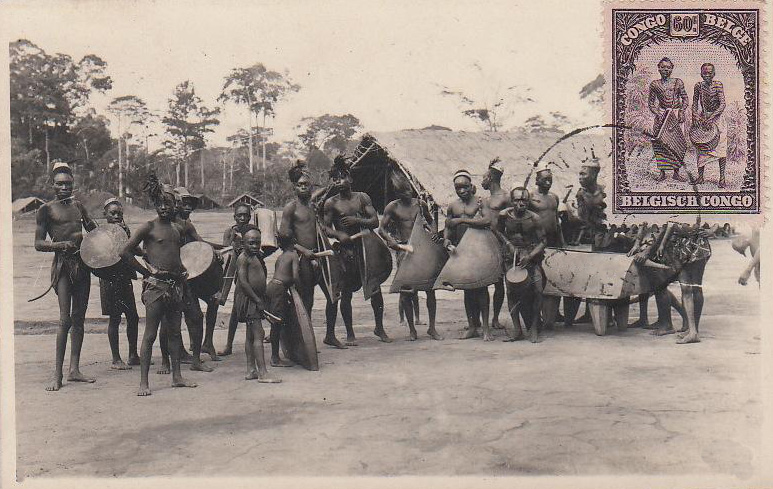
Historical photographs demonstrate that these instruments were not isolated art objects but formed an integral part of larger musical ensembles. During ceremonial performances, several slit drums were often played together with skin-covered drums, creating complex rhythmic structures that accompanied dances and public celebrations.
From an art-historical perspective, the Mangbetu slit drum should be understood not only as a musical instrument but also as an important example of African court art. It embodies the remarkable fusion of music, communication, craftsmanship, and visual aesthetics that characterizes the cultural traditions of northeastern Congo.
Literature / References
Laurenty, Jean-Sébastien. Les tambours à fente de l'Afrique centrale. 1968.
Kubik, Gerhard; Malamusi, Moya Aliya; Varsányi, András. Afrikanische Musikinstrumente.
Schildkrout, Enid. African Reflections: Art from Northeastern Zaire. 1990.
Royal Museum for Central Africa. Instrument documentation.