Mayombe (Yombe) drum (Ingomba) / Ngoma / Tambour
Democratic Republic of the Congo
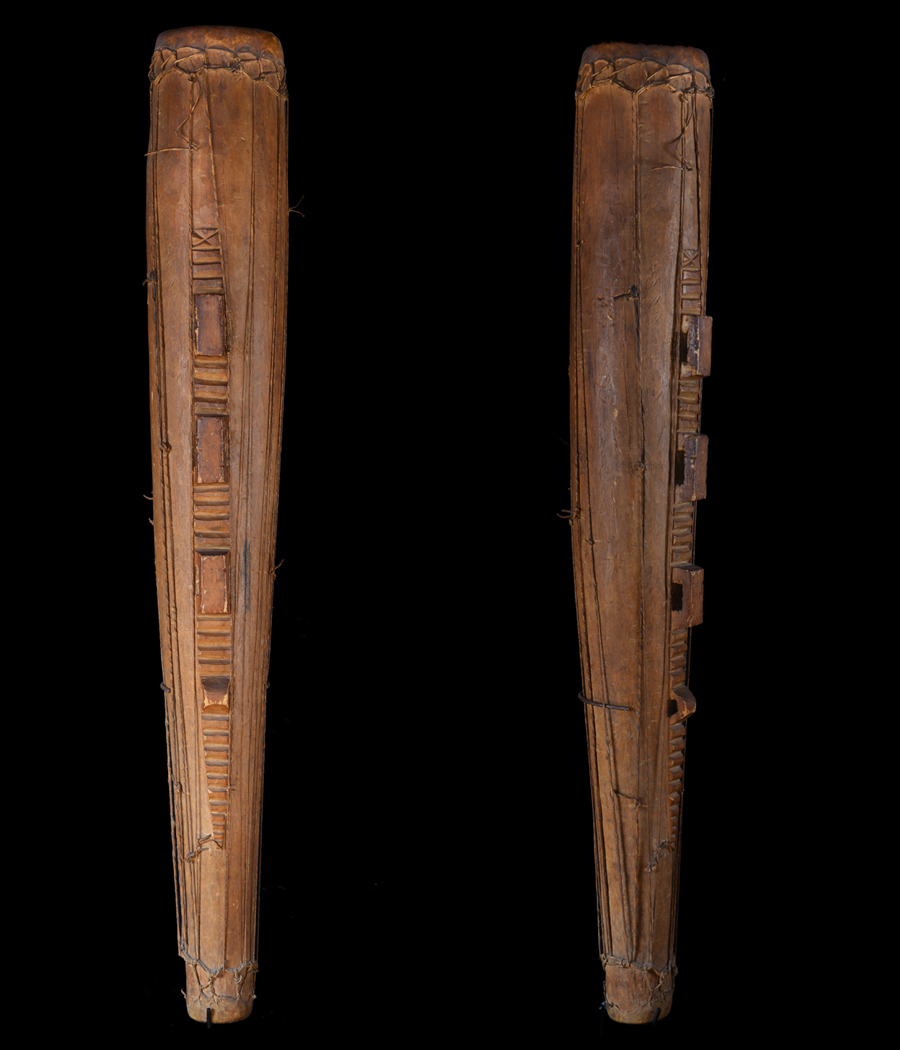
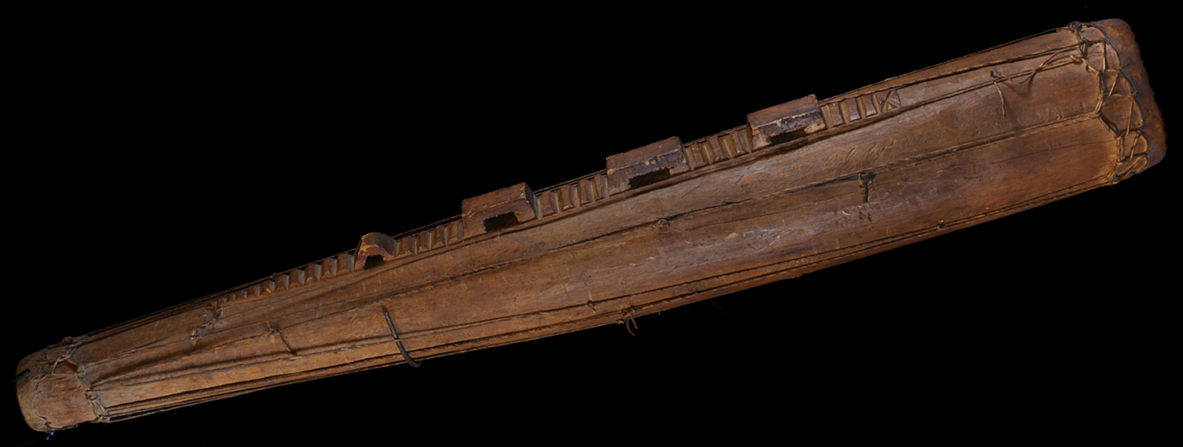
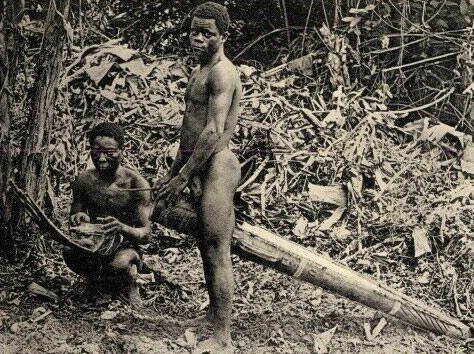
The Ingomba is a distinctive long conical double-headed drum of the Yombe and related peoples of the former Kingdom of Loango on the Atlantic coast of Central Africa. Its remarkable elongated form distinguishes it from most other Kongo drums and has made it one of the most recognizable instruments of the Lower Congo region.
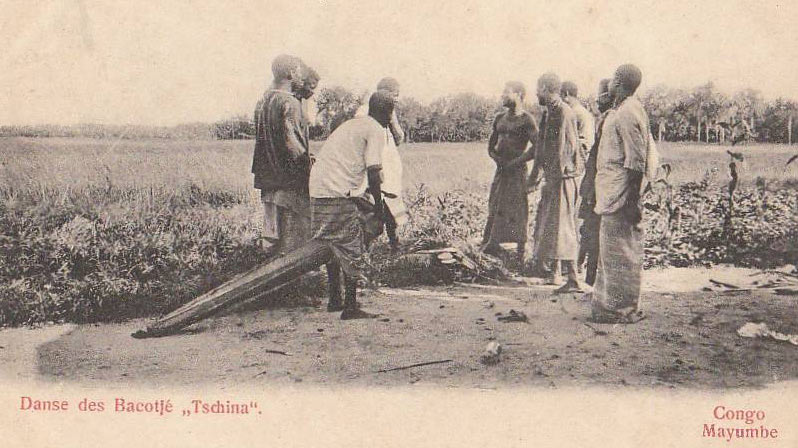
According to Andreas Meyer, the region is characterized by a variety of laced double-headed conical drums, of which the Ingomba represents the longest example. Earlier authors occasionally interpreted its unusual shape as an imitation of European gun barrels, although this explanation remains a historical interpretation rather than an established fact. Historical sources further record that the instrument was performed either with the hands or with a beater while the upper part of the drum was held between the player's legs.
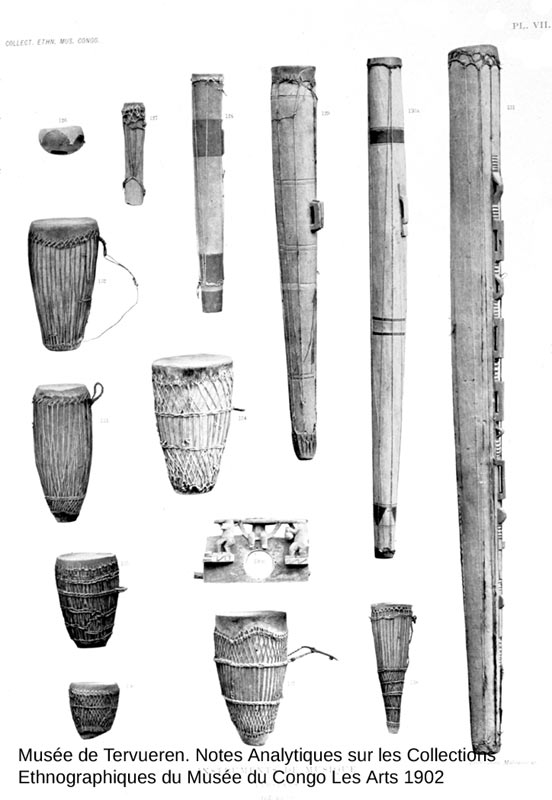
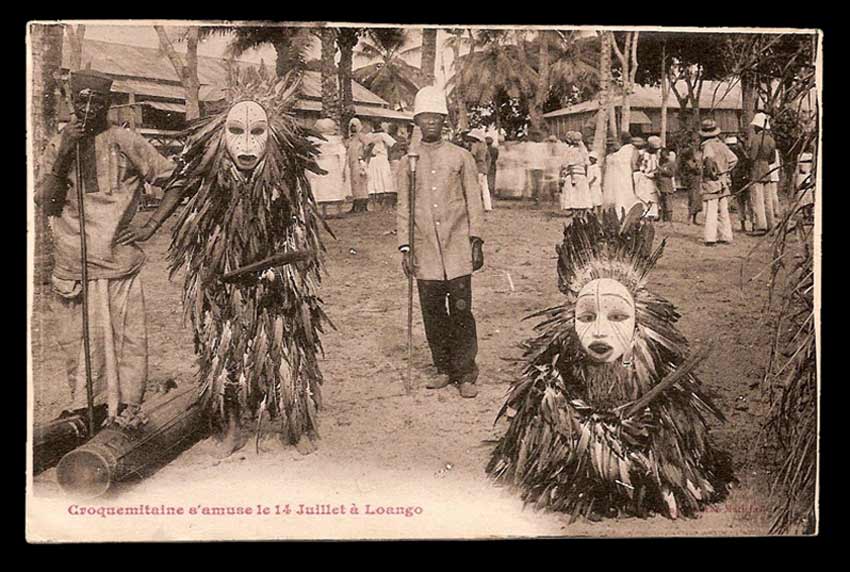
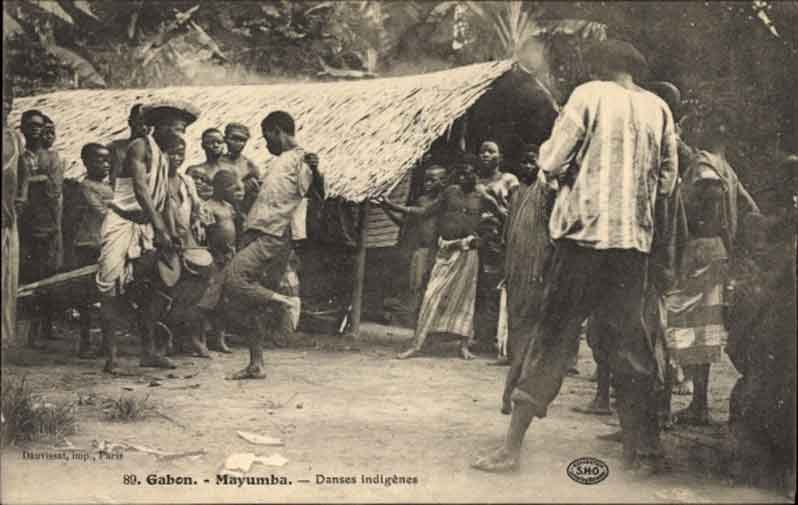
The present example is carved from a single piece of wood and gradually tapers towards the lower end. Historical illustrations published by the Musée du Congo in Tervuren (1902) document several nearly identical instruments, demonstrating that this characteristic form belonged to a well-established regional drum type. Contemporary photographs likewise show the Ingomba in ceremonial performance, confirming its role within the musical traditions of the Mayombe region.
Today, the Ingomba remains an important example of the distinctive drum-making traditions that developed within the former Kingdom of Loango and the wider Kongo cultural area.
Source
"The region is characterized by the presence of laced double-skin conical drums, which exist in various forms. In the territory of the former kingdom of Loango particularly long instruments of this type are known as ingomba."
Andreas Meyer, Afrikanische Trommeln – West- und Zentralafrika. Staatliche Museen zu Berlin, 1997, p. 243.
"In the literature they are often regarded as being imitations of European gun barrels. According to older sources these instruments were played with the hands or with a beater, the upper part of the drum body being held between the player's legs."
Andreas Meyer, Afrikanische Trommeln – West- und Zentralafrika. Staatliche Museen zu Berlin, 1997, p. 243.
Literature
Boone, Olga (1951). Les tambours du Congo Belge et du Ruanda-Urundi. 2 vols. Tervuren: Annales du Musée du Congo Belge, Ethnographie 1.
Chauvet, Stephen (1929). Musique Nègre. Paris.
Dagan, Esther A. (1993). Drums: The Heartbeat of Africa. Galerie Amrad.
Meyer, Andreas (1997). Afrikanische Trommeln – West- und Zentralafrika. Staatliche Museen zu Berlin.
Thompson, Robert Farris (1981). The Four Moments of the Sun: Kongo Art in Two Worlds. Washington, D.C.: National Gallery of Art.
Wieschhoff, Heinz (1933). Die afrikanischen Trommeln und ihre außerafrikanischen Beziehungen. Stuttgart.