Sabar Drum (Wolof, Senegal)
Sabar Drum (Wolof, Senegal)
Among the numerous percussion traditions of West Africa, the sabar of Senegal occupies a particularly important position because it functions simultaneously as a musical instrument, a means of social communication, and a symbol of cultural identity. Closely associated with the Wolof people, sabar drumming permeates almost every aspect of public life and remains one of the most vibrant and influential musical traditions in contemporary West Africa.
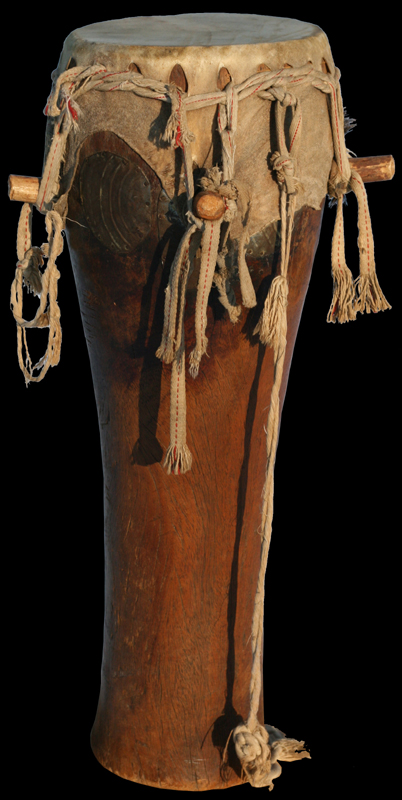
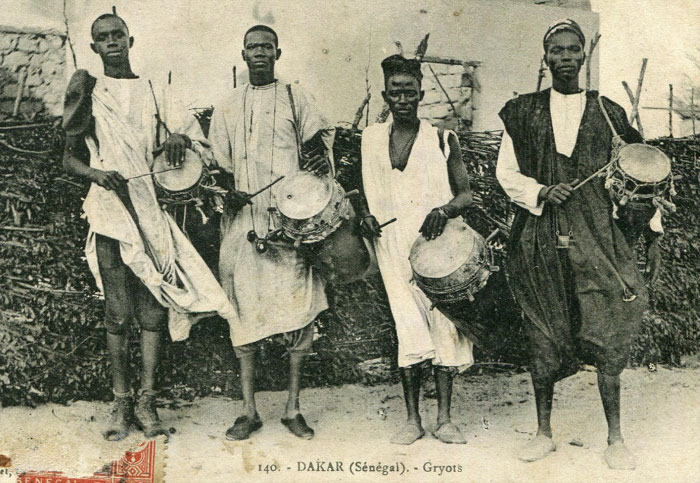
Unlike many other African drums, the sabar is played with an unusual combination of one hand and one wooden stick. This distinctive playing technique allows performers to produce an extraordinary variety of timbres, accents, and rhythmic patterns. The drum itself is carved from a single tree trunk, traditionally mahogany, and covered with a goatskin membrane that is tensioned by a complex system of pegs, leather rings, and cords. Although sabar drums differ considerably in size and shape, each individual drum type possesses a specific name, a characteristic sound, and a distinct musical function within the ensemble.
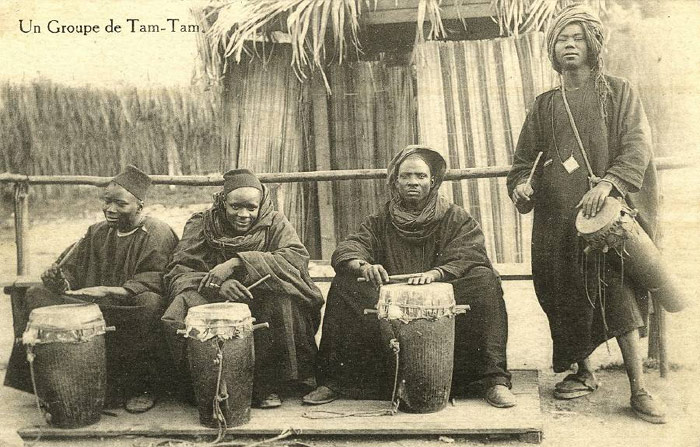
A traditional sabar ensemble may consist of six to twelve drummers performing interlocking rhythmic patterns that create highly sophisticated polyrhythmic structures. Rather than emphasizing a single dominant rhythm, the ensemble combines multiple rhythmic voices that interact continuously with one another. This musical dialogue between individual drummers forms the foundation of sabar performance and reflects a broader West African aesthetic in which collective participation and rhythmic complexity are closely connected.
The historical development of the sabar tradition cannot be separated from the social organization of Wolof society. For centuries, professional musicians belonged primarily to the géwël, the hereditary griot families responsible for preserving oral traditions, genealogies, praise poetry, and musical knowledge. Sabar performance developed within these specialist lineages and was transmitted from one generation to the next through oral instruction and practical apprenticeship. Even today, many of Senegal's most accomplished percussionists continue to trace their musical heritage to distinguished griot families.
The construction of a sabar drum traditionally requires close cooperation between different artisan groups. Members of the lawbe, the caste of woodworkers, carve the drum shell from a tree trunk, while the final assembly, including the preparation of the goatskin and the intricate lacing system, is often completed by experienced géwël musicians. This collaborative production process demonstrates the close relationship between craftsmanship and musical knowledge within Wolof culture.
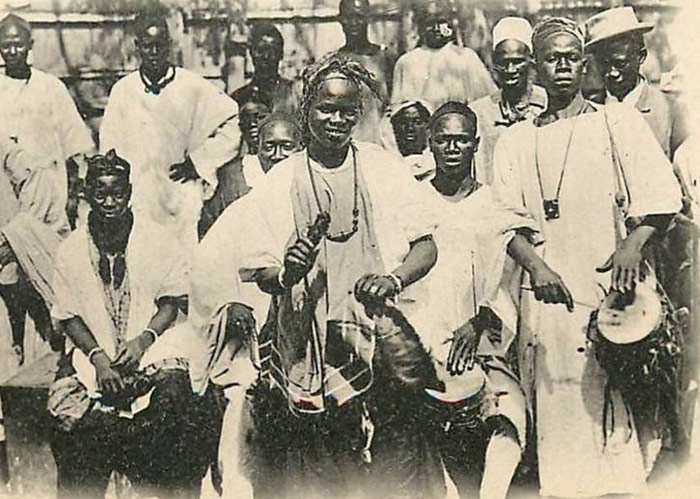
The ceremonial functions of the sabar are remarkably diverse. Sabar ensembles accompany baptisms, weddings, circumcision ceremonies, Islamic celebrations, political gatherings, wrestling competitions, and public festivities. The term "sabar" itself may refer not only to the instrument but also to the popular neighborhood dance events that represent one of the most widespread forms of social entertainment in Senegal. In these performances, music and dance are inseparable, and rhythmic patterns communicate directly with dancers through a highly developed vocabulary of movement and gesture.
"Sabars are an integral part of life cycle ceremonies (baptisms, weddings, and circumcisions), Muslim holiday celebrations, political meetings, and wrestling matches. Sabar drumming is inextricably linked to dance, and the sabar dance event is the most ubiquitous form of entertainment in Senegal."
Tang, Patricia (2007): Masters of the Sabar: Wolof Griot Percussionists of Senegal. Temple University Press.
Tang, Patricia (2007): Masters of the Sabar: Wolof Griot Percussionists of Senegal. Temple University Press.
Tang, Patricia (2012): The Rapper as a Modern Griot: Reclaiming Ancient Traditions. In: Eric Charry (ed.), Hip Hop Africa: New African Music in a Globalizing World. Indiana University Press.
Hale, Thomas A. (1998): Griots and Griottes. Bloomington: Indiana University Press.
Sabar – The Heartbeat of Senegal. A film by Arda Nederveen (2013).
Diop, Mapaté; Diop, Abdoulaye-Bara; Fall, Magatte (1996): Sabar Wolof: Dance Drumming of Senegal. CD recording.
Kubik, Gerhard: Musikgeschichte in Bildern – Westafrika. Leipzig 1989.
Meyer, Andreas: Afrikanische Trommeln – West- und Zentralafrika. Staatliche Museen Preußischer Kulturbesitz, Berlin 1997.