Africa
Tetela slit drum Congo
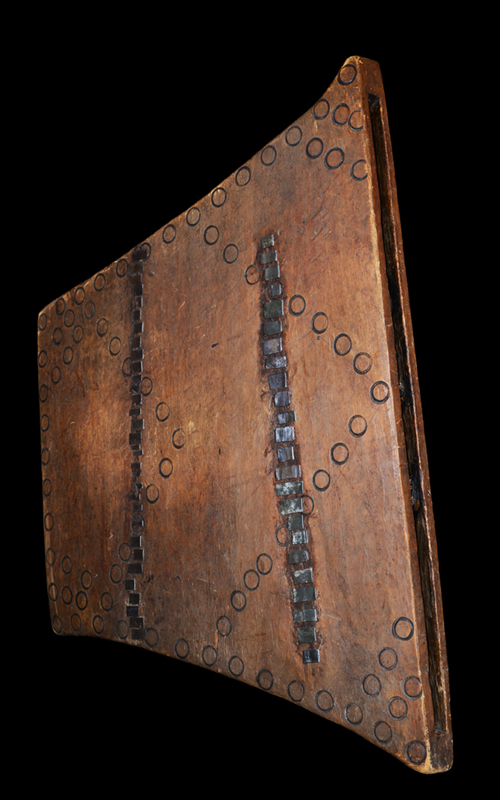
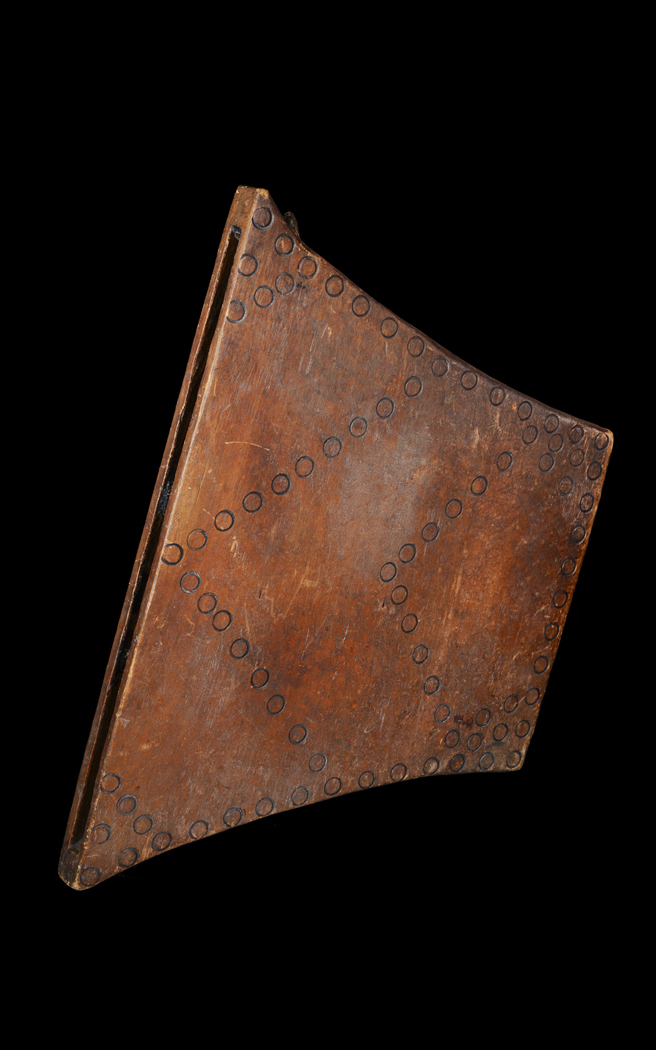
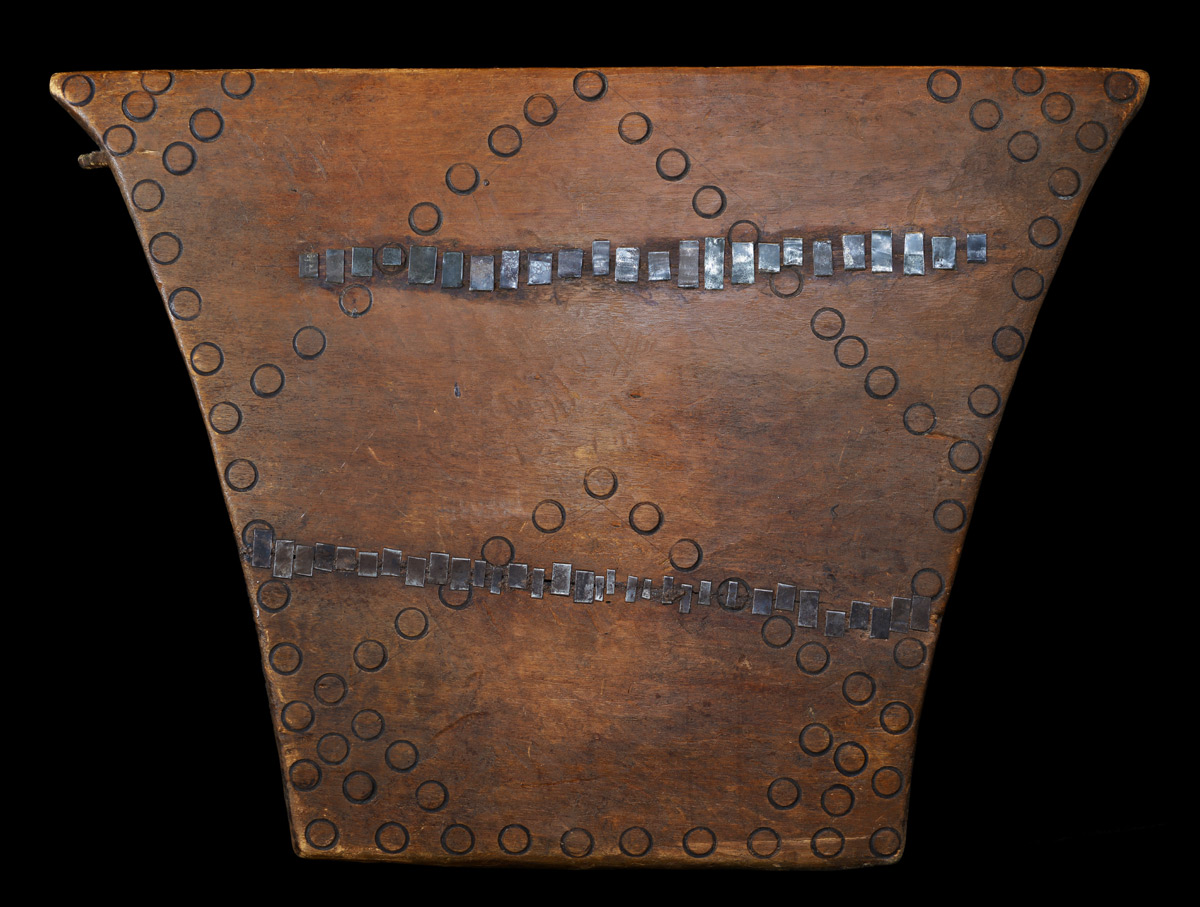
Lukumbi Slit Drum (Batetela, Democratic Republic of the Congo)
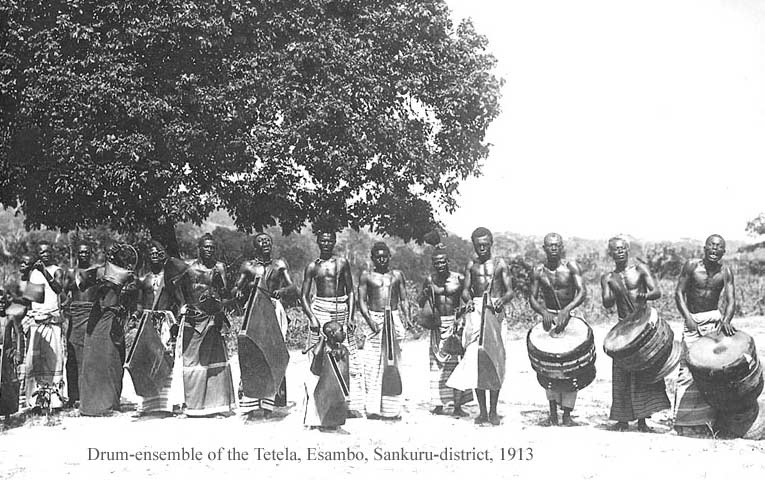
The Lukumbi is the principal slit drum of the Batetela (Tetela), a Bantu-speaking people living between the Lomami and Sankuru rivers in the central region of the present-day Democratic Republic of the Congo. Unlike membranophones, the Lukumbi belongs to the family of wooden slit drums (idiophones) and occupies a unique position within Batetela musical culture. It functions simultaneously as a musical instrument, a medium of long-distance communication, and a highly developed vehicle for the transmission of spoken language.
Historical accounts distinguish three principal drum types among the Batetela. The ngomo, a single-headed skin drum, accompanies dancing and ceremonial performances, while the ekuli, a small cylindrical drum formerly associated with warfare, later acquired new functions as a signal instrument for churches and schools. The Lukumbi, however, represents the most sophisticated member of this instrumental tradition. Its six carefully differentiated pitches enable experienced players to reproduce the tonal patterns and rhythmic structure of spoken Tetela, transforming the instrument into an effective means of communication across considerable distances.
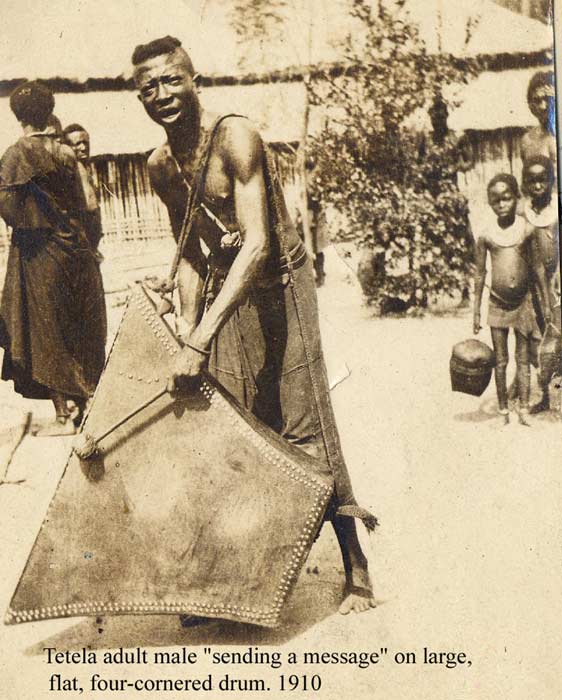
The instrument is carved from a single tree trunk and features a longitudinal slit that divides the sounding body into vibrating tongues of different thicknesses. These produce distinct pitches when struck with rubber-covered wooden beaters. Throughout Central Africa, similar slit drums are known under regional names such as lukumbi and nkumvi, reflecting the widespread distribution of this instrument throughout the Congo Basin, Maniema, Kasai, Katanga, Kivu, and Kwango regions. Depending on the context, the drum may be placed on the ground or carried on the player's shoulder by means of a strong rope.
Beyond its musical role, the Lukumbi served as one of the most important traditional signalling instruments of Central Africa. Skilled drummers transmitted messages by reproducing the melodic contour and rhythmic structure of spoken language, allowing information to travel rapidly from village to village. Mastering this complex signalling system required long periods of instruction under an experienced drummer, and performance remained the privilege of specially trained individuals whose knowledge combined musical skill with linguistic competence.
The Lukumbi therefore represents far more than a percussion instrument. It embodies the close relationship between language, music, and social organisation that characterises many Central African cultures. As both a communication system and a musical instrument, it occupies an exceptional position within the ethnomusicological heritage of the Congo.
"Three types of drums are used by the Batetela, a Bantu tribe situated between the Lomami and the Sankuru rivers in the Kasai Province of central Belgian Congo. The ngomo skin drum is used for dancing, usually accompanying the lukumbi, the six-toned slit drum. The ekuli, a small cylindrical two-toned drum, formerly used to signal victory in battle, is now used to call people to church and classes. The lukumbi is the most interesting and intricate of the three, and constitutes a highly developed poetic and musical art form as well as a means of communication".
Dorothy R. Gilbert
The Lukumbi: a six-toned slit drum of the Batetela
Dorothy R. Gilbert, The Lukumbi: A Six-Toned Slit Drum of the Batetela.
"The Batetela tribe are great drummers. Their drum is cut out of a single piece of wood and gives six different sounds according to the place where it is hit with the rubber-coated drum stick. It is used for signaling and a conventional syllabic alphabet enables the primitive telegraph operator to transmit any message to a distance of several miles. A chief always travels with his drummer and his messages transmitted from village to village will keep him in constant contact with his home."
E. Torday, The New Congo Collection. Detached from The Museum Journal, University of Pennsylvania Museum, Vol. 4, 1913.
"This type of slit drum is found in a large area of the Congo: Central Basin, Maniema, Kasai, Katanga, Kivu and Kwango, and is called by several names (lukumbi, nkumvi). The slit drum is placed either on the ground or carried around on the player’s shoulder by a strong rope while playing. Besides functioning as a signal instrument, the trapezoidal slit drum is also frequently incorporated into ensembles for entertainment music, where its deep tones make it ideal for a rhythmic bass. Playing the slit drum remains the privilege of certain people in the village who are trained to do so. Not only must they know how to signal messages but must also be able to play sufficiently well and this is not a skill that everyone can acquire. This means that the learner drummer must first be thoroughly trained by an established drummer, whose place he will later take. Not everyone can play a slit drum, but virtually everyone understands the signal language."
Copyright © Royal Museum for Central Africa ('RMCA'), 2018. All rights reserved.
excerpt from the website:http://music.africamuseum.be/instruments/english/congo%20drc/bakpekpe.html
Royal Museum for Central Africa (RMCA). Musical Instruments of the Democratic Republic of the Congo. 2018.
Bibliography
Gilbert, Dorothy R. The Lukumbi: A Six-Toned Slit Drum of the Batetela.
Jacobs, J. Signaaltrommeltaal bij de Tetela.
Musique des Tetela. Anthology of Congolese Music, Vol. 8.
Royal Museum for Central Africa (RMCA). Musical Instruments of the Democratic Republic of the Congo. 2018.
Torday, Emil. The New Congo Collection. Detached from The Museum Journal, University of Pennsylvania Museum, Vol. 4, 1913.