Africa
Yaka drum Congo
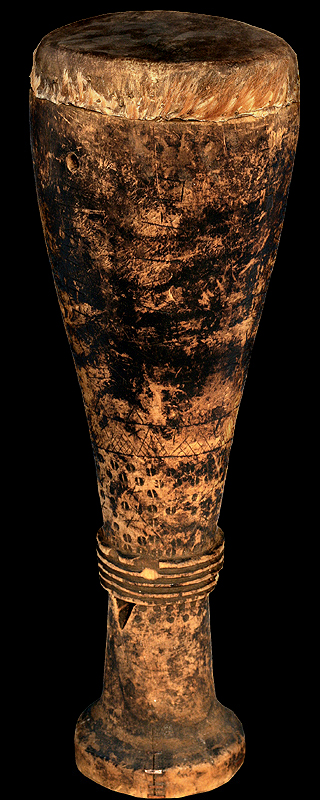
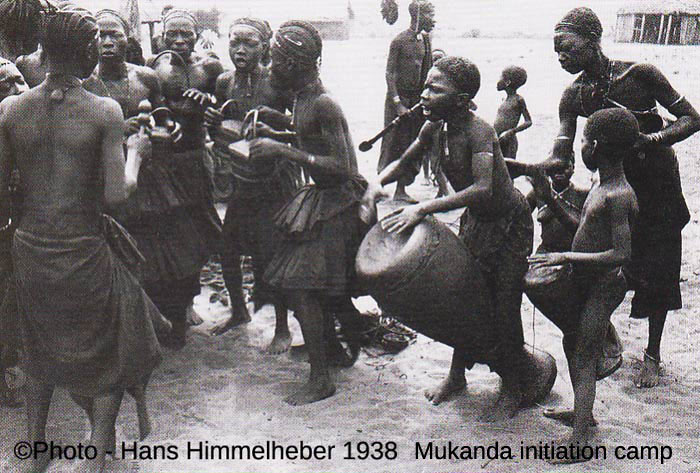
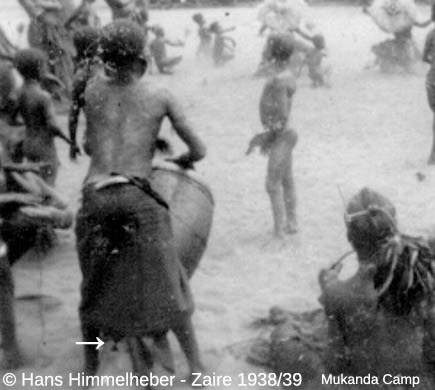
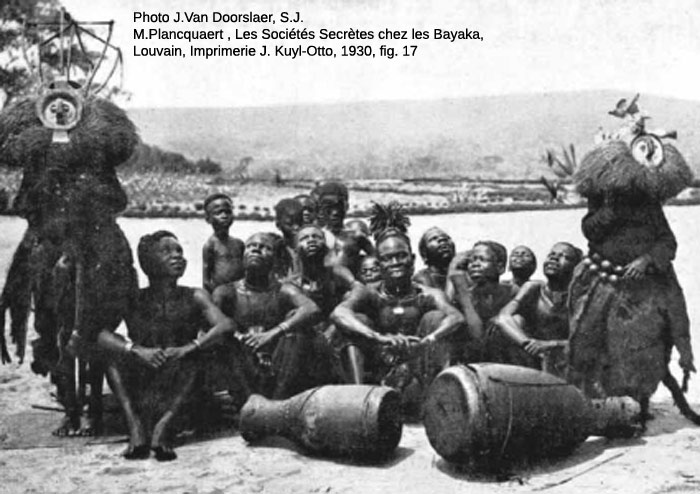
Yaka Mukanda Drum (Yaka / Bayaka, Democratic Republic of the Congo)
This ceremonial drum originates from the Yaka (Bayaka) of the Kwango region in the southwestern Democratic Republic of the Congo. It belongs to the musical tradition of the Mukanda, the male initiation institution through which adolescent boys were instructed in the social, moral, and spiritual responsibilities of adult life. More than a period of physical seclusion, the Mukanda represented one of the most important institutions of Yaka society, preserving communal identity through ritual, education, music, dance, and masquerade.
Historical studies describe the Bayaka as a society whose ceremonial life was deeply rooted in ancestral traditions and ritual practice. The successful completion of the Mukanda depended upon the careful observance of numerous ceremonial procedures intended to maintain harmony with the ancestral spirits. Within this ritual context, music formed an indispensable component of initiation, accompanying dances, masked performances, and public ceremonies throughout the different stages of the initiation cycle.
The present drum belongs to the family of large ceremonial wooden membranophones used during Mukanda performances. Its elegant vessel-shaped body, narrow pedestal foot, and broad drumhead represent a distinctive Central African drum form associated with the ceremonial traditions of the Yaka. The lower section of the body is decorated with finely carved geometric ornamentation arranged in several horizontal bands, demonstrating the high level of craftsmanship characteristic of Yaka woodcarving.
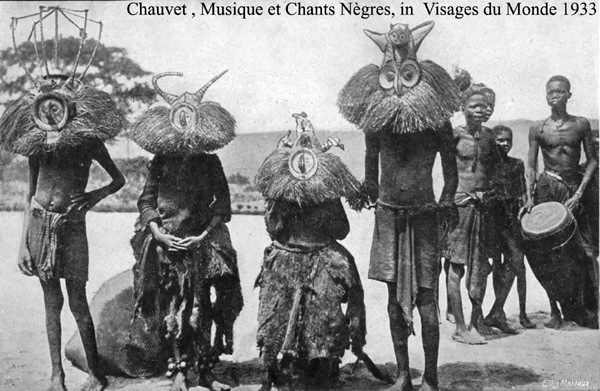
Particularly remarkable is the characteristic carved aperture in the pedestal foot. Comparison with historical photographs published by Michel Plancquaert (1930), Stephen Chauvet (1933), and Hans Himmelheber (1938/39) suggests that comparable ceremonial drums were used during Mukanda performances during the first half of the twentieth century. Although the available photographs do not permit every constructional detail to be examined with complete certainty, the distinctive opening in the pedestal, together with the overall proportions of the instrument and the characteristic decorative carving around the lower body, closely corresponds to the present museum specimen and strongly indicates its association with the same regional Yaka ceremonial tradition.
The museum specimen also preserves evidence of traditional repair in the form of a carefully stitched longitudinal crack in the wooden body. Rather than replacing the instrument, the damaged corpus was repaired and returned to use, suggesting that the drum possessed considerable practical, ceremonial, or symbolic value for its owners. Such repairs are frequently encountered on historically important African ritual objects that remained in active use over long periods.
Today, surviving Mukanda drums constitute important testimonies to the artistic, musical, and ceremonial traditions of the Yaka. They preserve not only the craftsmanship of Central African woodcarvers but also the memory of one of the region's most significant initiation institutions, in which music, masquerade, ritual performance, and communal education formed an inseparable cultural whole.
Bibliography
Bourgeois, Arthur P. Art of the Yaka and Suku. Meudon: Alain and Françoise Chaffin, 1984.
Himmelheber, Hans. Negerkunst und Negerkünstler. Braunschweig: Klinkhardt & Biermann, 1960.
Himmelheber, Hans. Zaire 1938/39. Photographic Documents on the Arts of the Yaka, Pende, Tshokwe and Kuba.
Plancquaert, Michel. Les Sociétés Secrètes chez les Bayaka. Louvain: Imprimerie J. Kuyl-Otto, 1930.