DRUMS OF THE WORLD

Magar shaman drum Nepal
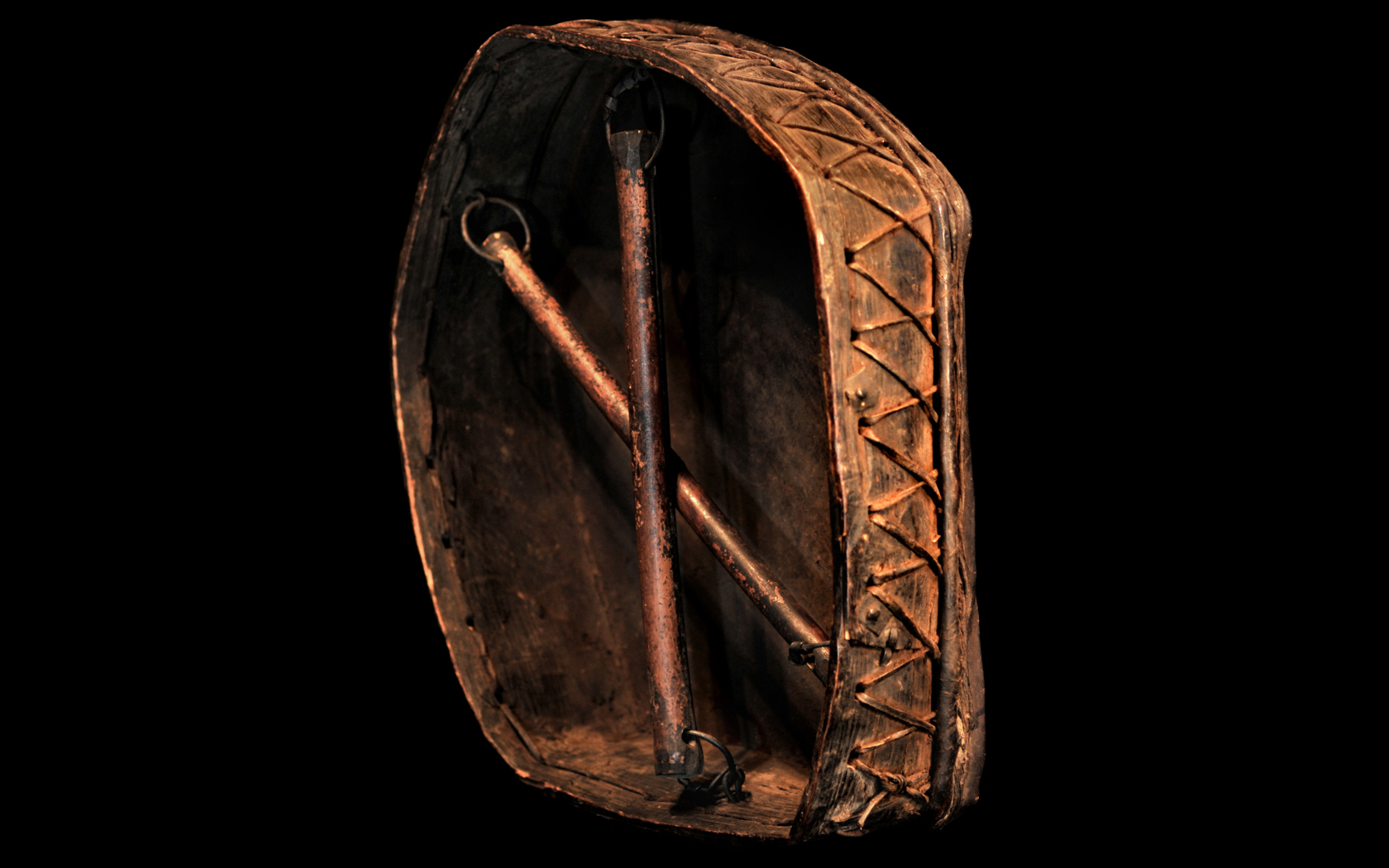
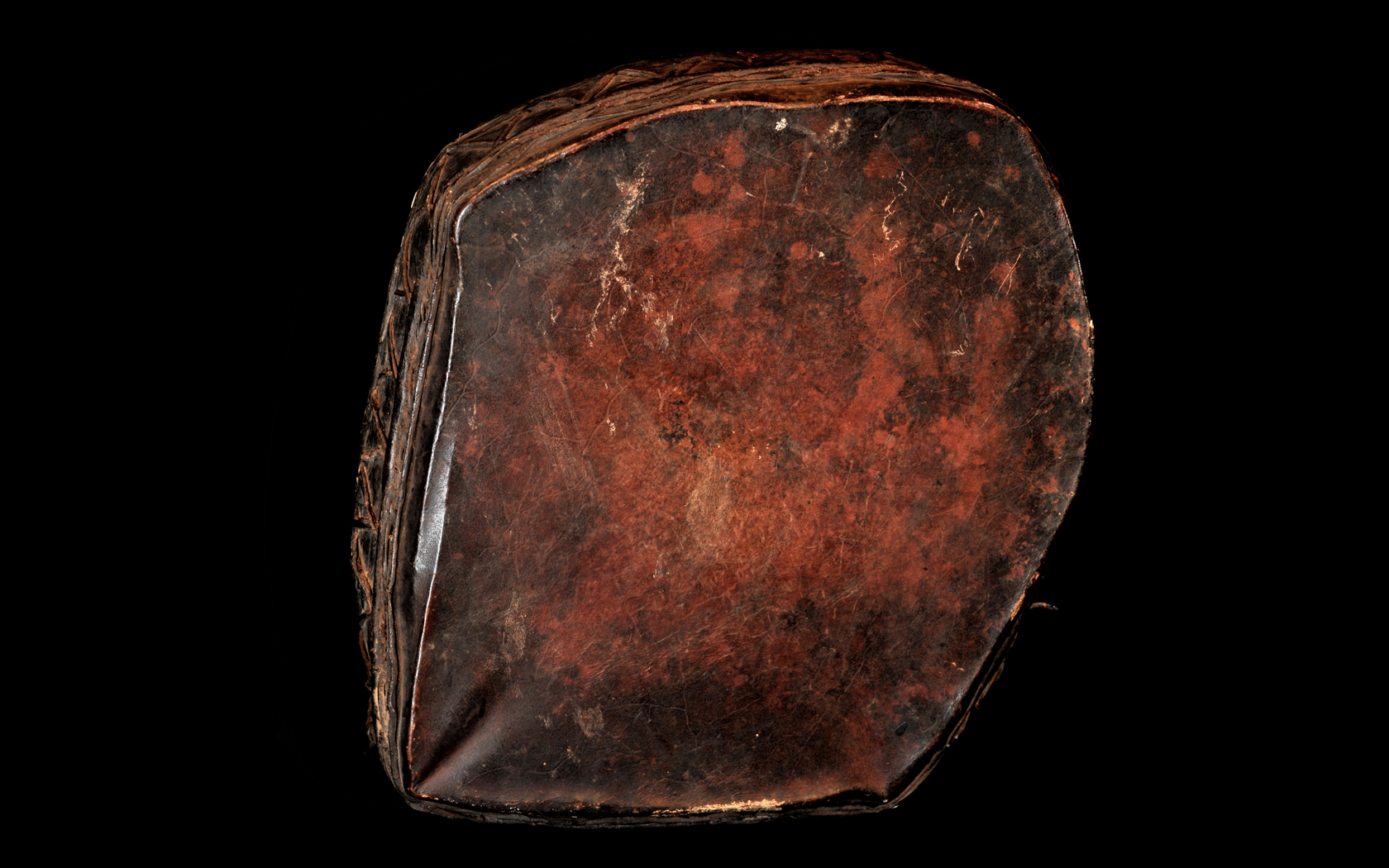
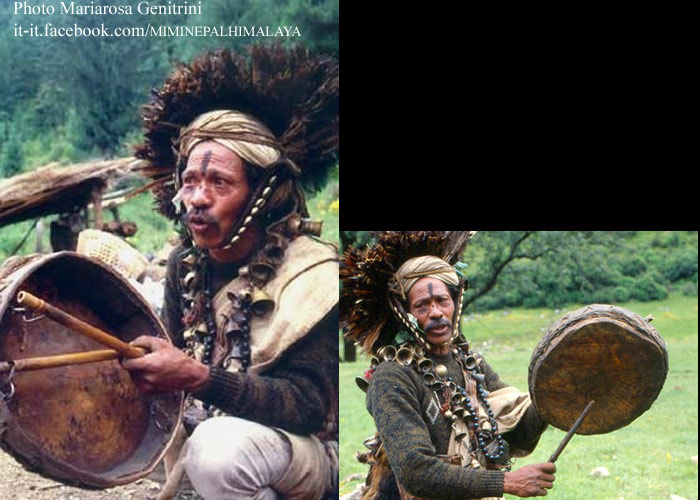


Magar Shaman Drum (Magar, Nepal)

The shaman drum of the Magar, one of Nepal's largest indigenous ethnic groups, is among the most important ritual instruments of Himalayan shamanism. Used by ritual specialists known as jhānkri, the drum accompanies healing ceremonies, spirit journeys, divination, ancestral rites, and rituals intended to restore harmony between the human, natural, and spiritual worlds. Within Magar cosmology, the drum is regarded not merely as a musical instrument but as an indispensable ritual implement through which the shaman establishes communication with supernatural beings and protective spirits.

Unlike ceremonial drums used in Buddhist monasteries or Hindu temples, the Magar shaman drum belongs to the sphere of indigenous Himalayan religion. During ritual performances, the repetitive rhythms accompany the chanting of sacred narratives, invocations, and ritual formulae while supporting the altered state of consciousness required for communication with the spirit world. The drum also accompanies ritual dance and serves as an audible expression of the shaman's authority throughout the ceremony.

Organologically, the instrument is a single-headed frame drum constructed from a thin wooden strip bent into a circular or slightly oval frame and covered with an animal skin membrane. It is usually played with a wooden beater while being held in one hand. Although individual examples vary in size and decoration, this construction is characteristic of many Himalayan shamanic traditions and reflects a remarkably conservative instrument type that has remained largely unchanged over generations.

Within Magar shamanism, the drum possesses meanings that extend far beyond its acoustic function. Ethnographic research has shown that it serves simultaneously as a ritual companion, a symbolic means of spiritual travel, a protective object against malevolent forces, and an instrument employed during diagnosis and healing. The drum therefore embodies the close relationship between sound, ritual practice, and cosmological belief that characterizes Himalayan shamanic traditions.

Beyond its religious significance, the Magar shaman drum represents an important example of Nepalese ritual art and intangible cultural heritage. Although usually modest in appearance, its value lies not in elaborate decoration but in its ceremonial function and symbolic meaning. As both a sacred ritual object and a musical instrument, it continues to occupy a central position within the traditional religious practices of the Magar and contributes to the preservation of one of the oldest surviving shamanic traditions of the Himalayas.

Source
"All shamanic drums are frame drums made of a wooden lath bent in a circular or oval shape and a membrane stretched over this frame. The drum's numerous functions – as a musical instrument accompanying the recitation of mythical songs, as a pacemaker of ritual dances, as a vehicle on which the shaman travels through space, as a defensive and assault weapon against negative powers, as a diagnostic and prognostic instrument – make it a kind of all-purpose companion to its owner."

Michael Oppitz, Forschungen an den Rändern der Schrift, exhibition at Galerie Buchholz, Berlin, 2018; based on Morphologie der Schamanentrommel, Birkhäuser, Basel, 2013.

"The drum serves the shaman as the preeminently suitable means to recall the dormant treasures of oral literature from memory and perform them for his congregation."

Michael Oppitz, Forschungen an den Rändern der Schrift, Galerie Buchholz, Berlin, 2018. :contentReference[oaicite:0]{index=0}

"The ritual drum of the healers embodies, without writing, the local knowledge of the mountain peoples."

Michael Oppitz, Morphologie der Schamanentrommel, Birkhäuser, Basel, 2013. :contentReference[oaicite:1]{index=1}

"The magical drum appears as a true emblem of the profession."

Michael Oppitz, Le tambour rẽ et son pouvoir, Cahiers d'ethnomusicologie, translated by Isabelle Schulte-Tenckhoff.

Bibliography:
Oppitz, Michael (2013) : Morphologie der Schamanentrommel.
Oppitz, Michael (2013) : Schamanen im Blinden Land (5 DVDs + 2 CDs)
Pannier, F. (2007) : Art chamanique népalais - Nepalese shamanic art. Galerie leToit du Monde.
Nioradze, G.(1925 ) : Der Schamanismus bei den Sibirischen Volkern. Strecker und Schröder.
Eliade, Mircea (1964) : Shamanism - Archaic Techniques of Ecstasy.
Diószegi, Vilmos ; Hoppál, Mihály (1978) : Shamanism in Siberia. Akadémiai Kiadó, Budapest.
Hoppál, Mihály (1994) : Schamanen und Schamanismus. Pattloch, Augsburg.
Diószegi, Vilmos (1963): Glaubenswelt und Folklore der sibirischen Völker.
Manker, Ernst (1938) : Die Lappische Zaubertrommel - Die Trommel als Denkmal materieller Kultur. Acta Lapponica, I
Manker, Ernst (1950) : Die Lappische Zaubertrommel - Die Trommel als Urkunde geistigen Lebens. Acta Lapponica, VI
Hitchcock, John; Jones, R. (Editor) (1976) : Spirit Possession in the Nepal Himalayas.
Mastromattei, R. ; Farano, F. (2006) : Rta. Sciamani in Eurasia. Il rito che sopravvive.
Riboli, Diana (2000) : Tunsuriban. Shamanism in the Chepang of Central and Southern Nepal
Sales, Anna de (1991) : Je suis né de vos jeux de tambours. La religion chamanique des Magar du Nord.

back