Himalaya
Rgna Temple Drum Tibet
Rnga Temple Drum (Tibet and Nepal)
The rnga is one of the principal ceremonial drums of Tibetan Buddhism and has formed an integral part of monastic ritual practice for centuries. Used throughout Tibet and the Himalayan regions of Nepal, the instrument accompanies liturgical ceremonies, religious processions, sacred masked dances (cham), and other ritual performances conducted within Buddhist monasteries. Unlike secular percussion instruments intended for entertainment, the rnga serves exclusively within a religious context, where its sound contributes to the ceremonial atmosphere and supports the performance of Buddhist liturgy.
Within the ritual orchestra of Tibetan Buddhism, the rnga performs both musical and ceremonial functions. It accompanies the chanting of sacred texts, invocations, and ritual offerings together with cymbals (rol mo), long trumpets (dung chen), oboes (rgya gling), conch shells (dung dkar), and other liturgical instruments. Rather than providing uninterrupted accompaniment, the drum frequently alternates with periods of vocal recitation, creating instrumental interludes that articulate the structure of complex ceremonies and emphasize important ritual transitions. Its deep, resonant sound reinforces the solemn character of Buddhist worship and contributes to the carefully organized soundscape of the monastery.
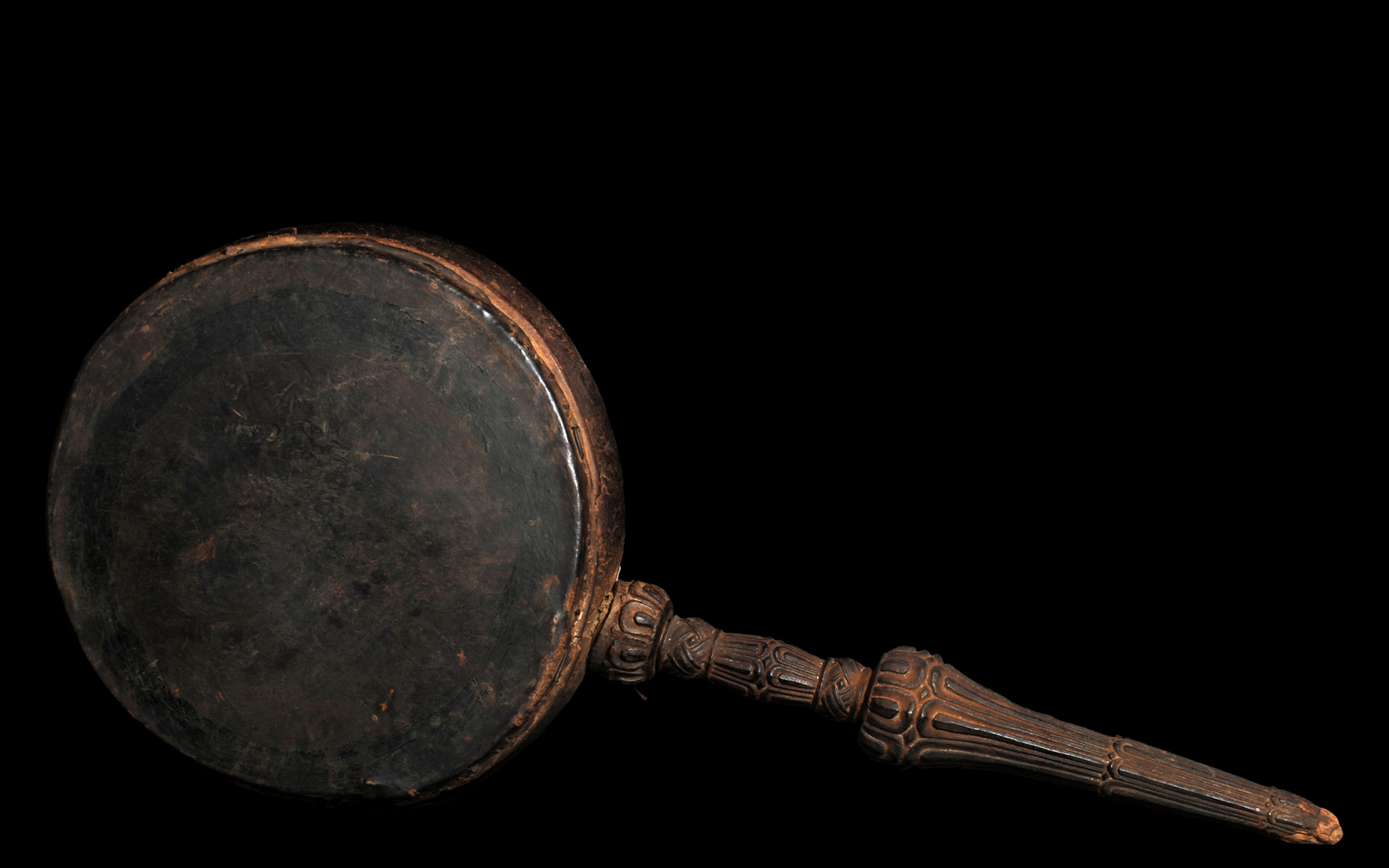
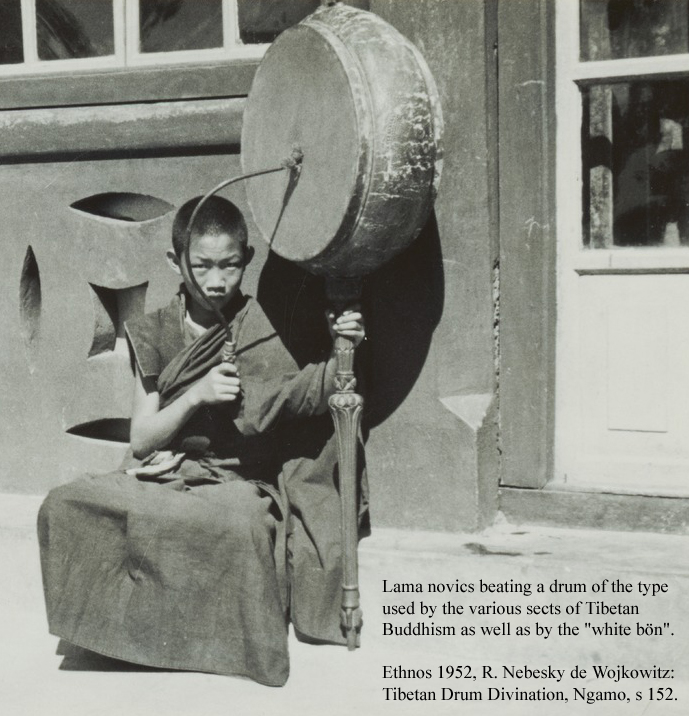
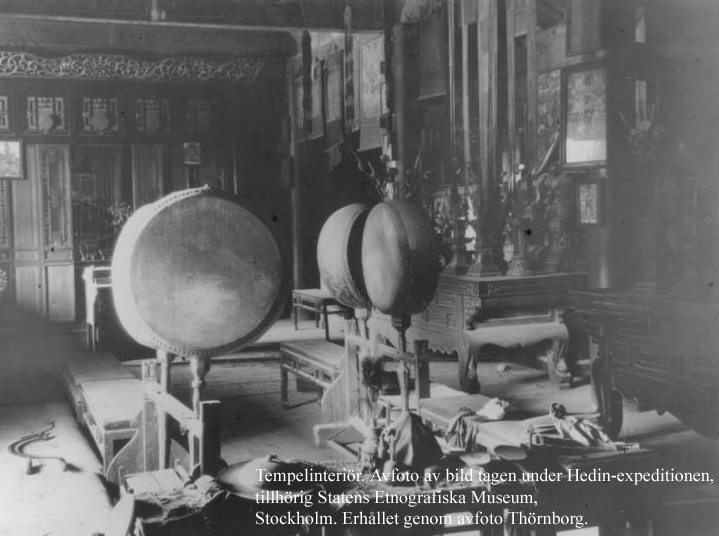
The rnga is a double-headed frame drum consisting of a circular wooden frame covered on both sides with animal skin membranes. It is normally played with a single curved wooden beater while the instrument is supported by a carved wooden handle held in the performer's left hand. During lengthy ceremonies, the handle may be inserted into a specially designed stand, allowing the musician to continue playing without continuously supporting the weight of the instrument. Many examples also incorporate a suspension ring at the upper edge, enabling the drum to be hung securely when not in use. Although dimensions and decorative details vary among monasteries and regional workshops, the instrument has retained its characteristic form and ceremonial function throughout the Himalayan Buddhist world.
Beyond its musical purpose, the rnga is also an important example of Himalayan religious craftsmanship. The carved wooden handle is frequently ornamented with lotus blossoms, diamond-shaped (lozenge) patterns, and other decorative motifs characteristic of Tibetan Buddhist art. The lotus, one of Buddhism's most significant symbols, represents purity, spiritual awakening, and enlightenment, while the geometric ornamentation reflects the refined artistic traditions of Himalayan woodcarving. These decorative elements demonstrate that the instrument was conceived not merely as a functional object but also as a sacred work of ritual art.
The ceremonial significance of the rnga extends far beyond its musical function. Within Tibetan Buddhism, ritual instruments are regarded as integral components of religious practice whose sound reinforces liturgical performance, accompanies ritual movement, and contributes to the spiritual environment of the monastery. As both a sacred musical instrument and a finely crafted ceremonial object, the rnga embodies the close relationship between music, religion, and visual art that characterizes the ritual culture of Tibetan Buddhism. Its continued use in monasteries throughout Tibet and Nepal reflects an unbroken ceremonial tradition that has remained central to Himalayan Buddhist worship for many centuries.
Bibliography:Lhalungpa, Lobsang P. Tibetan Music: Secular and Sacred. In: Asian Music, Vol. 1
Sadie, S. (Ed.), The New Grove Dictionary of Musical Instruments. 3 Volumes, London, 1984.
Scheidegger, D.A., Tibetan Ritual Music. Rikon, 1988
Vandor, I., Die Musik des Tibetischen Buddhismus. Wilhelmshaven, 1978