New Guinea
Asmat Drum New Guinea
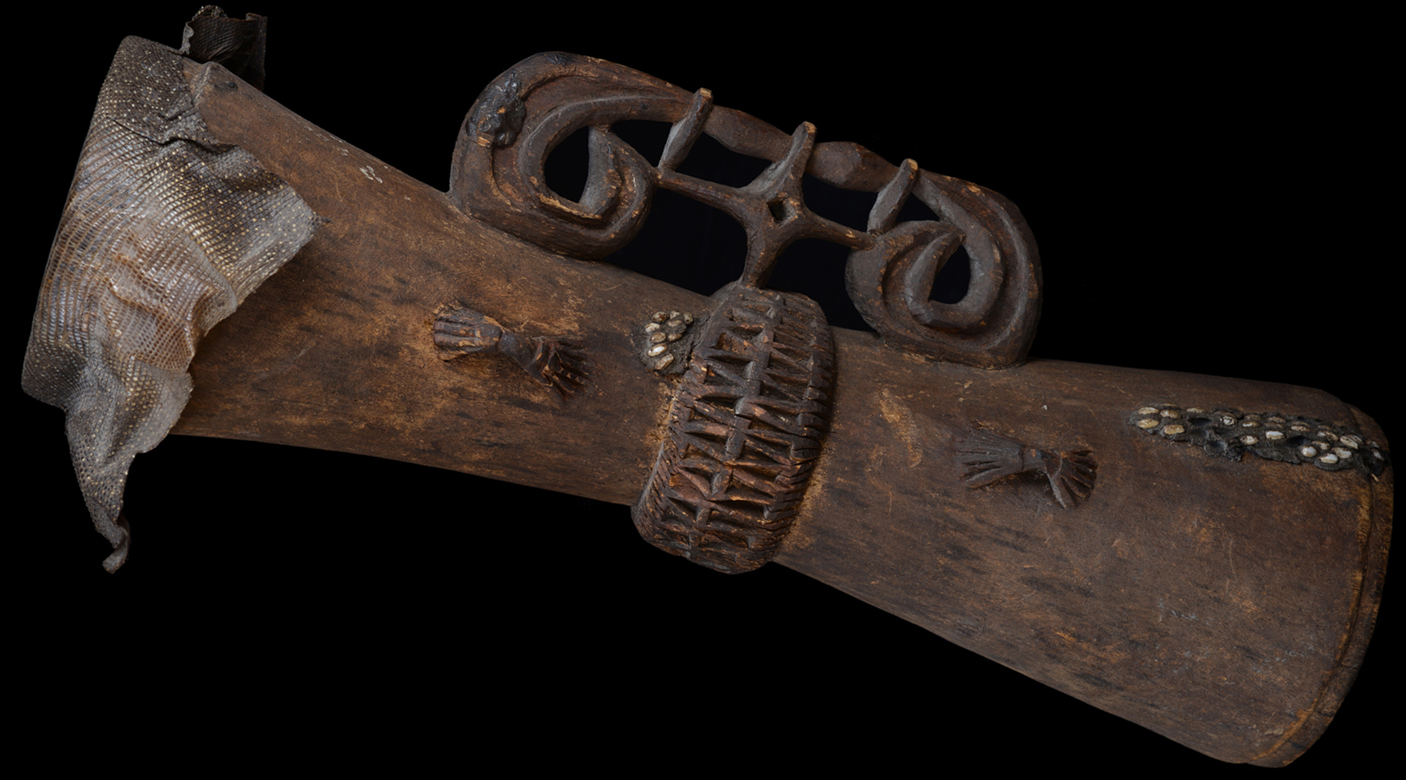
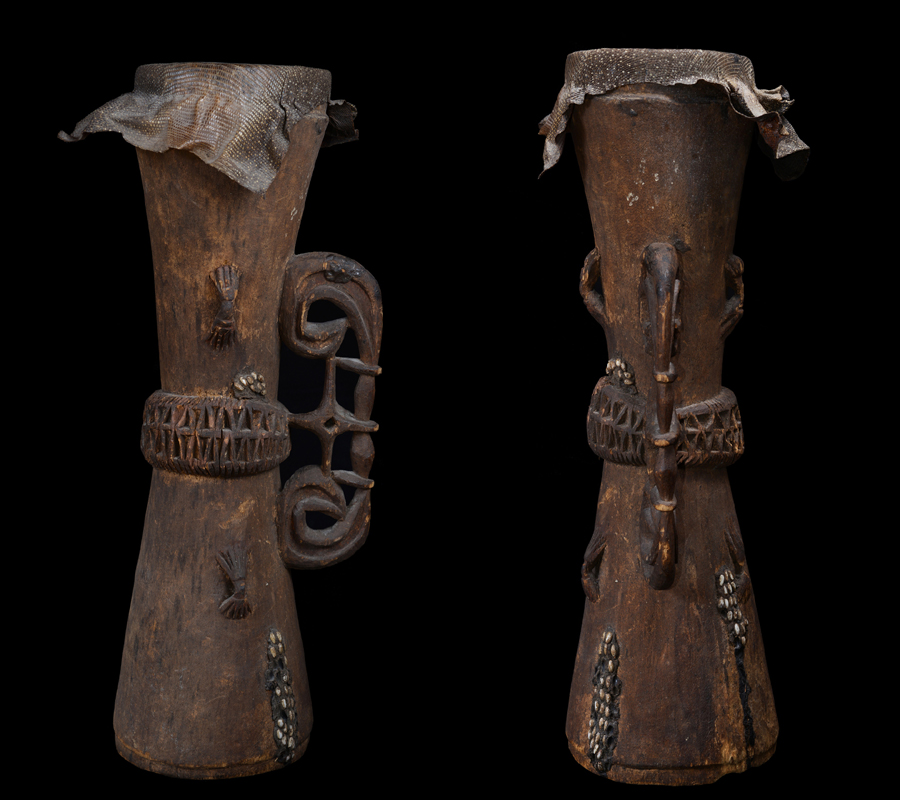
Asmat Drum (Asmat, New Guinea, Indonesia)
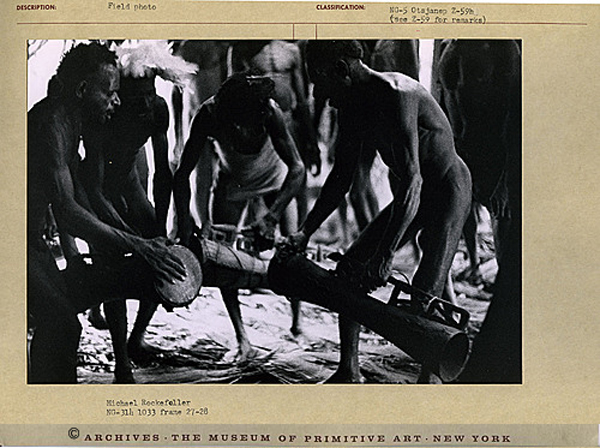
The drum occupies a particularly important position within the traditional musical culture of the Asmat of southwestern New Guinea. Asmat drums are played during ceremonies and feasts and accompany songs performed in both public and communal contexts. Their importance is also reflected in Asmat origin traditions, in which the culture hero Fumeripits creates the first drum and, through its sound, brings the wooden human figures he has carved to life.
The present example is a single-headed, hourglass-shaped drum carved from one piece of wood. Asmat drums of this type are generally played while held by the carved handle, with the membrane struck directly by the free hand. The drumhead is traditionally made from lizard skin. Museum examples document the use of beeswax on the membrane for the fine adjustment of its sound, while the tension of the skin can be regulated by warming it over a fire. The Metropolitan Museum of Art records several comparable Asmat drums made of wood with lizard skin, fiber and beeswax.
The handle of the present drum is particularly elaborate. It is carved as an openwork structure incorporating several stylized figures and curved elements, while the body is comparatively restrained in its decoration. Elaborately carved handles are a characteristic feature of many Asmat drums.
The drum is therefore representative of an Asmat instrument type in which musical function and woodcarving are closely connected. Its construction as a handheld membranophone, the use of a reptile-skin membrane, and the elaborately carved handle correspond closely with documented Asmat examples in major museum collections. At the same time, the individual carving of the handle gives the present instrument its distinctive artistic character.
The close relationship between drumming, ceremonial performance and Asmat origin traditions makes the drum more than a purely functional musical instrument. Its form and carved decoration belong to the broader tradition of Asmat woodcarving, in which musical instruments, ancestor imagery and other carved objects participate in a highly developed visual culture.
Bibliography:Gerbrands, Adrian A. (ed.): The Asmat of New Guinea: The Journal of Michael Clark Rockefeller. New York: Museum of Primitive Art, 1967.
Helferich, Klaus, Jebens, Holger, Nelke, Wolfgang & Winckelmann, Carolina: Asmat – Mythos und Kunst im Leben mit den Ahnen. Berlin: Museum für Völkerkunde, 1995.
Konrad, Gunter & Konrad, Ursula (eds.): Asmat – Myth and Ritual: The Inspiration of Art. Venice: Erizzo Editrice, 1995.
Schneebaum, Tobias: Embodied Spirits – Ritual Carvings of the Asmat. Salem: Peabody Museum of Salem, 1990.
Smidt, Dirk A. M. (ed.): Asmat Art: Woodcarvings of Southwest New Guinea. Leiden, 1993.
The Metropolitan Museum of Art: Drum, Asmat people, mid-20th century, Michael C. Rockefeller Memorial Collection.