Carved Face and Eye Motifs on a Kwoma Kundu Drum | Washkuk Hills, Papua New Guinea
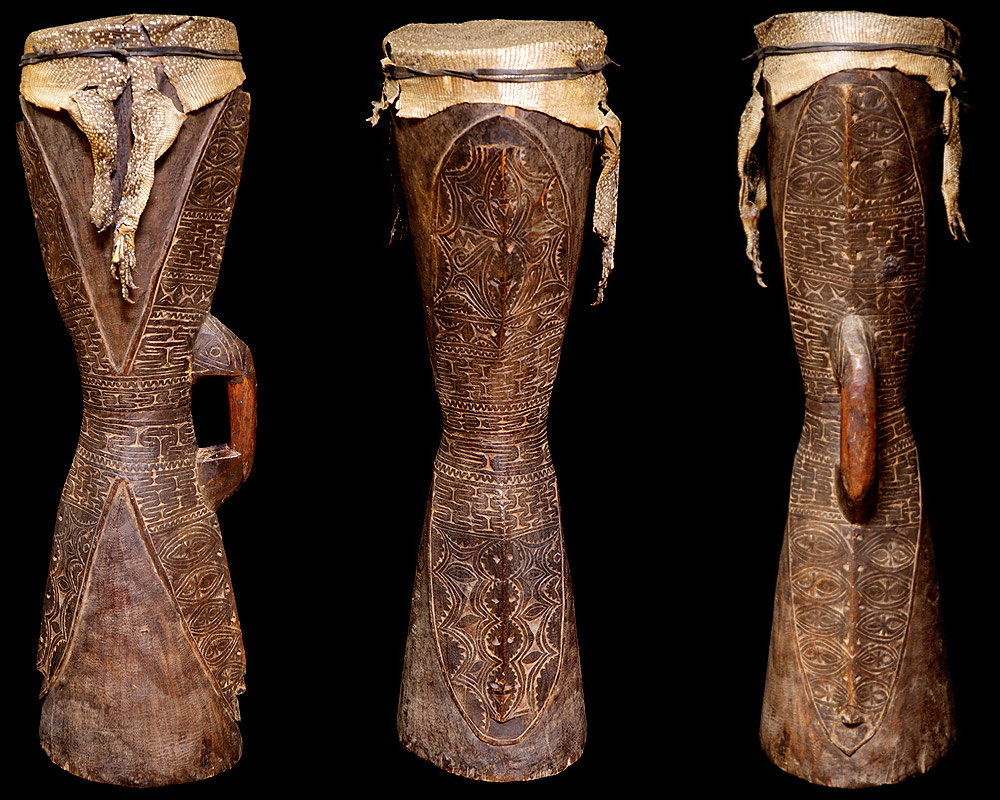
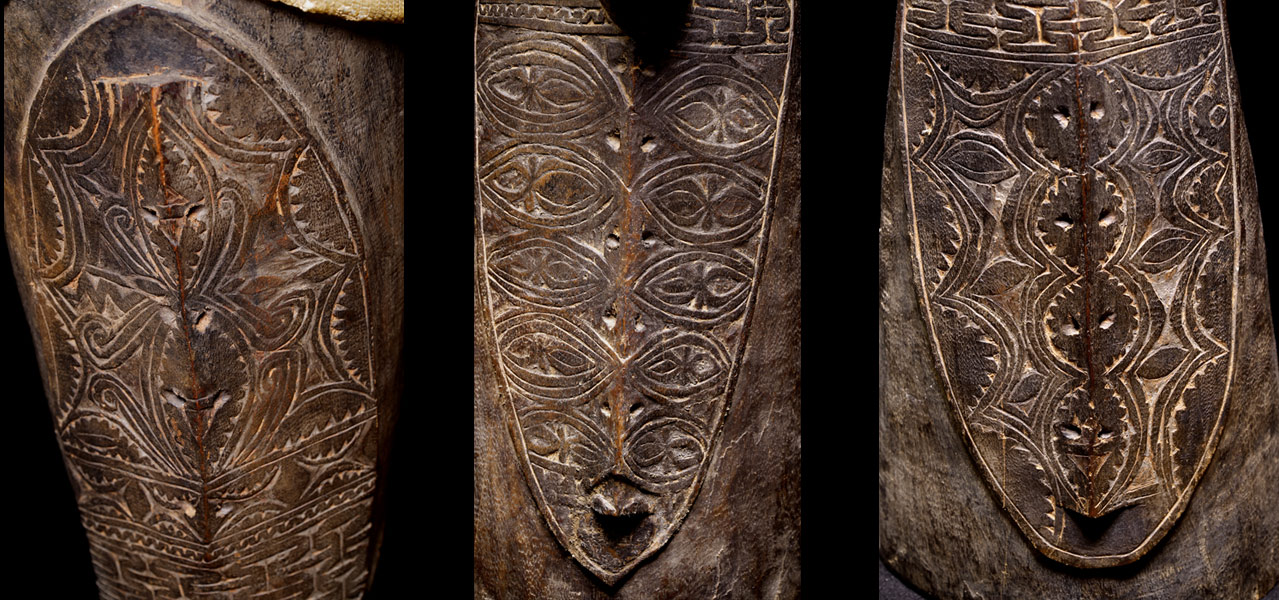
This single-headed kundu is distinguished by its hourglass-shaped body, pronounced central waist and carved side handle. Its entire exterior is covered with densely arranged incised and relief-carved ornament. Large, vertically structured panels alternate with horizontal geometric bands, while repeated eye motifs and elongated, stylized faces form highly symmetrical compositions. The elaborate decoration follows the contours of the body, making the carved surface a defining feature of this instrument.
The drum is held by its carved side handle and played by striking the membrane with the free hand. The extensive surface wear and patination of the wood reflect prolonged use and handling.
Kundu drums accompany singing, dancing, ceremonies and communal performances throughout Papua New Guinea. The elaborate carving of this example, particularly its distinctive face and eye motifs, reflects the close relationship between musical instruments and visual art in the region.
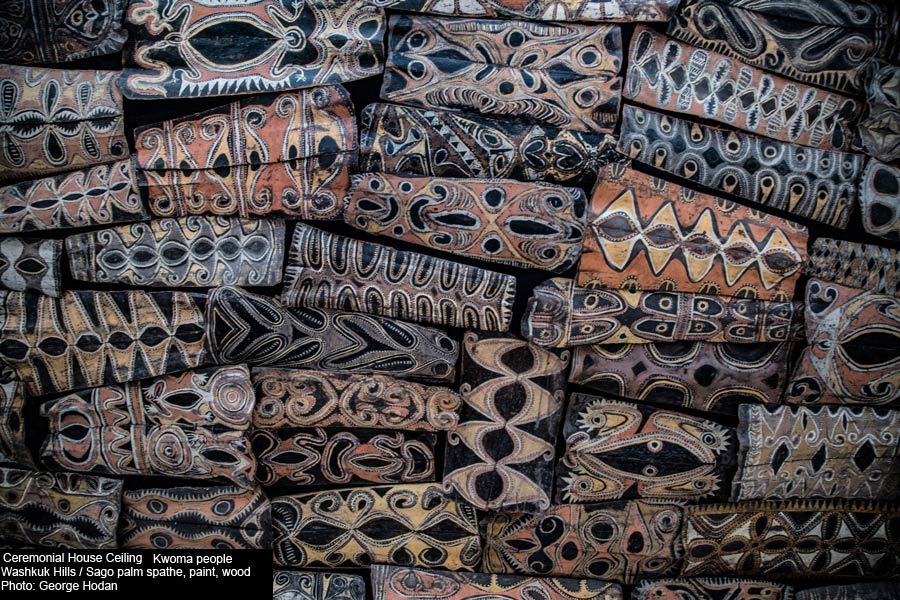
The drum most likely originates from the Washkuk Hills area of the Middle Sepik region and can probably be attributed to the Kwoma people. Its intricate ornamental patterns invite comparison with the richly decorated ceilings of Kwoma ceremonial houses, including examples documented by The Metropolitan Museum of Art. Kwoma ceremonial life centres on the annual yam harvest cycle, with rites such as Yena, Mindja and Noukwi associated with powerful spirits believed to ensure the growth of the crops.
Bibliography
Haddon, Alfred Cort:
The Decorative Art of British New Guinea: A Study in Papuan Ethnography. Cambridge, 1894.
Friede, John (ed.):
New Guinea Art: Masterpieces from the Jolika Collection of Marcia and John Friede. San Francisco: Fine Arts Museums of San Francisco, 2005.