New Guinea
Drum Distribution Across New Guinea
Drum Distribution Across New Guinea
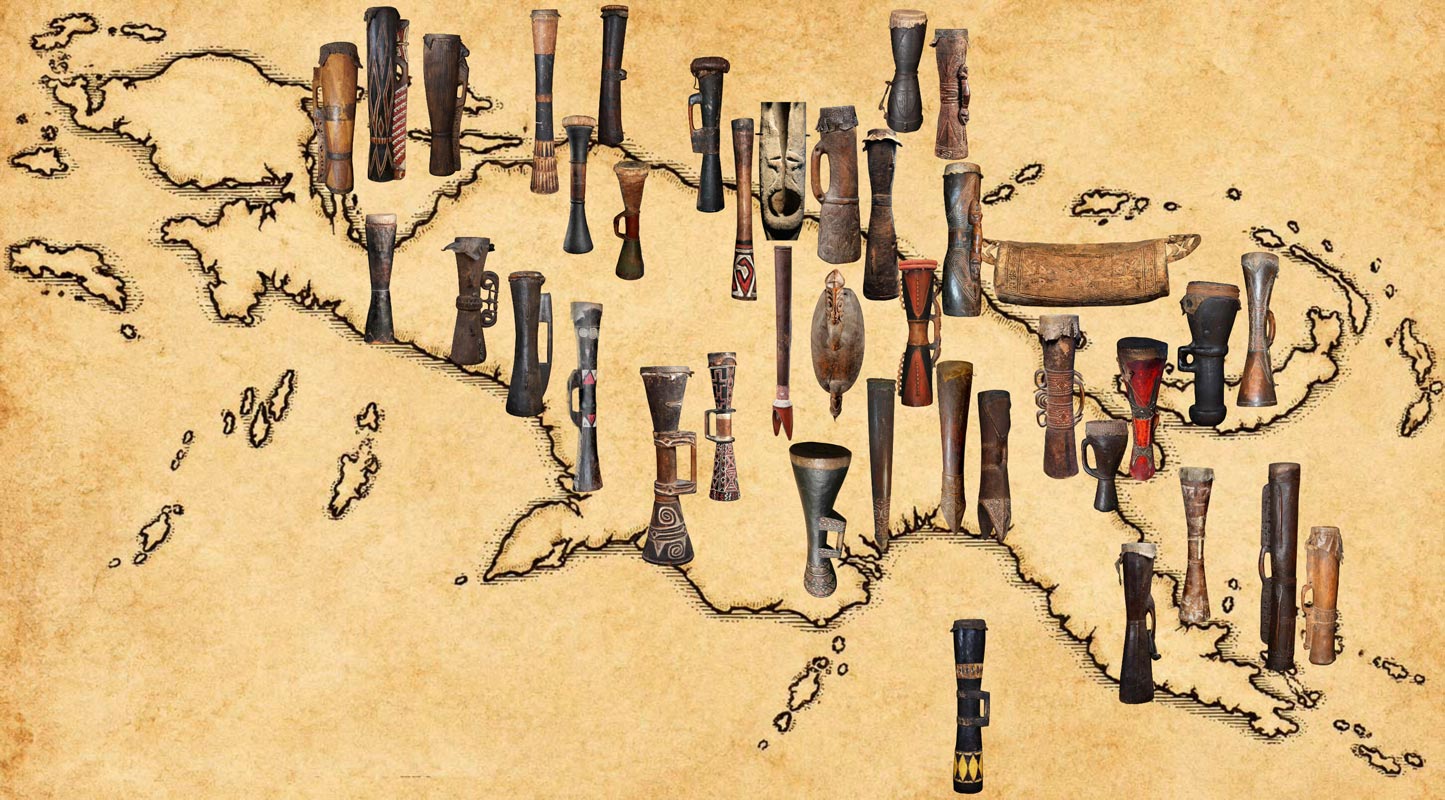
This map illustrates the geographical distribution of selected drums from New Guinea, bringing together instruments from different cultural regions of the island. The individual photographs show examples from the collection, positioned approximately in relation to their respective regions of origin.
The map reveals the remarkable diversity of traditional drum forms found throughout New Guinea. Differences in shape, proportions, construction, surface decoration and carved ornament reflect distinct regional artistic traditions and cultural identities. From the hourglass-shaped kundu drums of various coastal and inland communities to the large slit gongs known as garamut in parts of the Sepik region, these instruments represent a rich and varied material heritage.
Beyond their musical function, drums have played important roles in the social, ceremonial and spiritual life of many communities. They accompany dances and festivities, communicate messages, mark important events and are associated with ancestral traditions and ritual practices. Together, the instruments shown here offer an insight into the cultural richness and diversity of New Guinea's traditional drum-making heritage.
Please note: The drum images shown on this map are for illustration purposes only and cannot be clicked. The clickable drum thumbnails are located on the previous page, the New Guinea overview page. Please return to that page to select a drum. Each thumbnail links to a dedicated page with additional photographs and detailed information about the respective drum.