New Guinea
Torricelli Mountains Slit Drum

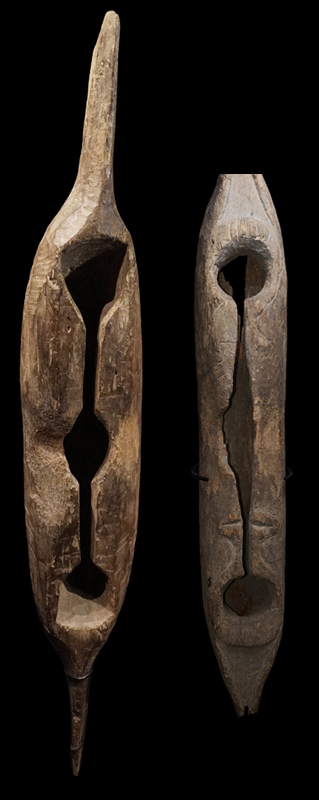
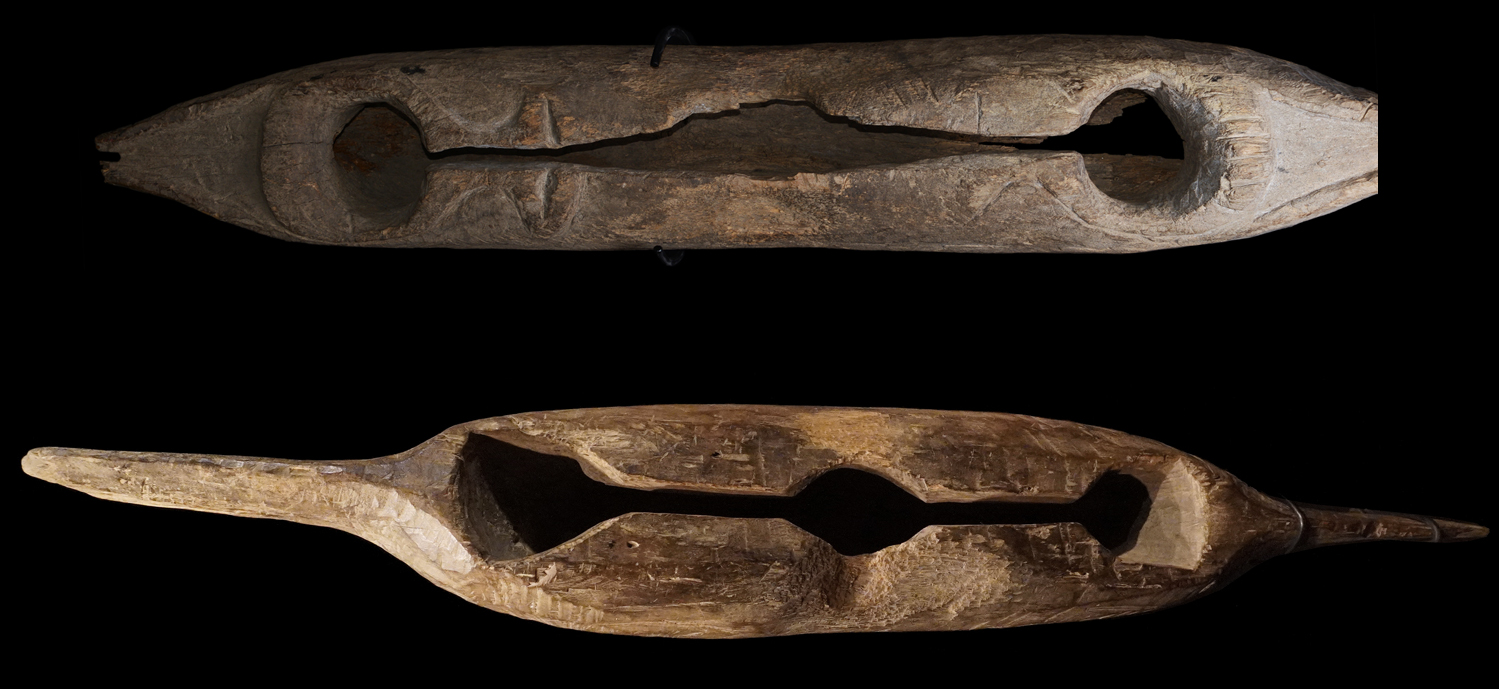
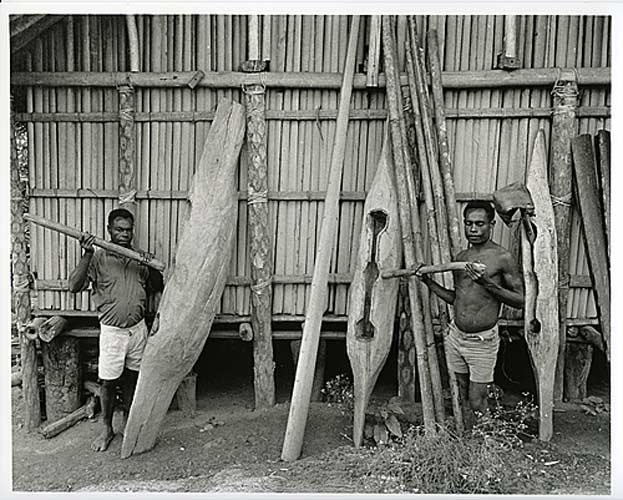
Torricelli Mountains Slit Drum ( bun'gi or tukin ) | Lumi Area, West Sepik Province, Papua New Guinea
The slit drums of the Torricelli Mountains differ in form from many of the better-known garamut drums of the Sepik region. Barry Craig describes those from the Torricelli Mountains as symmetrically canoe-shaped, with prow and stern treated alike and the slit formed as a double keyhole. This distinctive construction represents a recognizable regional variation within the wider Sepik tradition of slit gongs.
Their sound is produced directly by striking the wooden body with a wooden beater. The dimensions and internal thickness of the wooden body influence the resulting resonance and pitch. Larger instruments can produce powerful sounds capable of carrying over considerable distances.
In the Sepik region, slit drums have both musical and communicative functions. They accompany ceremonial songs, dances and other communal performances, where their strongly resonant sound provides rhythmic structures for collective activity. At the same time, patterned sequences of beats can function as signals, allowing information to be transmitted between settlements over long distances.
"The slit gongs (slit drums, garamuts) of the Torricelli Mountains are symmetrically canoe-shaped, carved so that prow and stern look alike, and the slit is in the form of a double keyhole."
Barry Craig, Slit Gongs of the Sepik and Madang Provinces.
Bibliography:
Bateson, G. (1958): Naven. London: Wildwood House.
Burridge, K. O. L. (1959): "The slit-gong in Tangu, New Guinea." Ethnos 24.
Craig, Barry: Slit Gongs of the Sepik and Madang Provinces.
Craig, Barry; Busse, Mark; Eoe, Soroi (2010): Living Spirits with Fixed Abodes – The Masterpieces Exhibition. Papua New Guinea National Museum and Art Gallery.
Gourlay, K. A. (1975): Sound Producing Instruments in Traditional Society.
Hamson, Michael: The Art of West Sepik.