Vokeo / Wogeo Island Kundu Drum (East Sepik Province, Papua New Guinea)
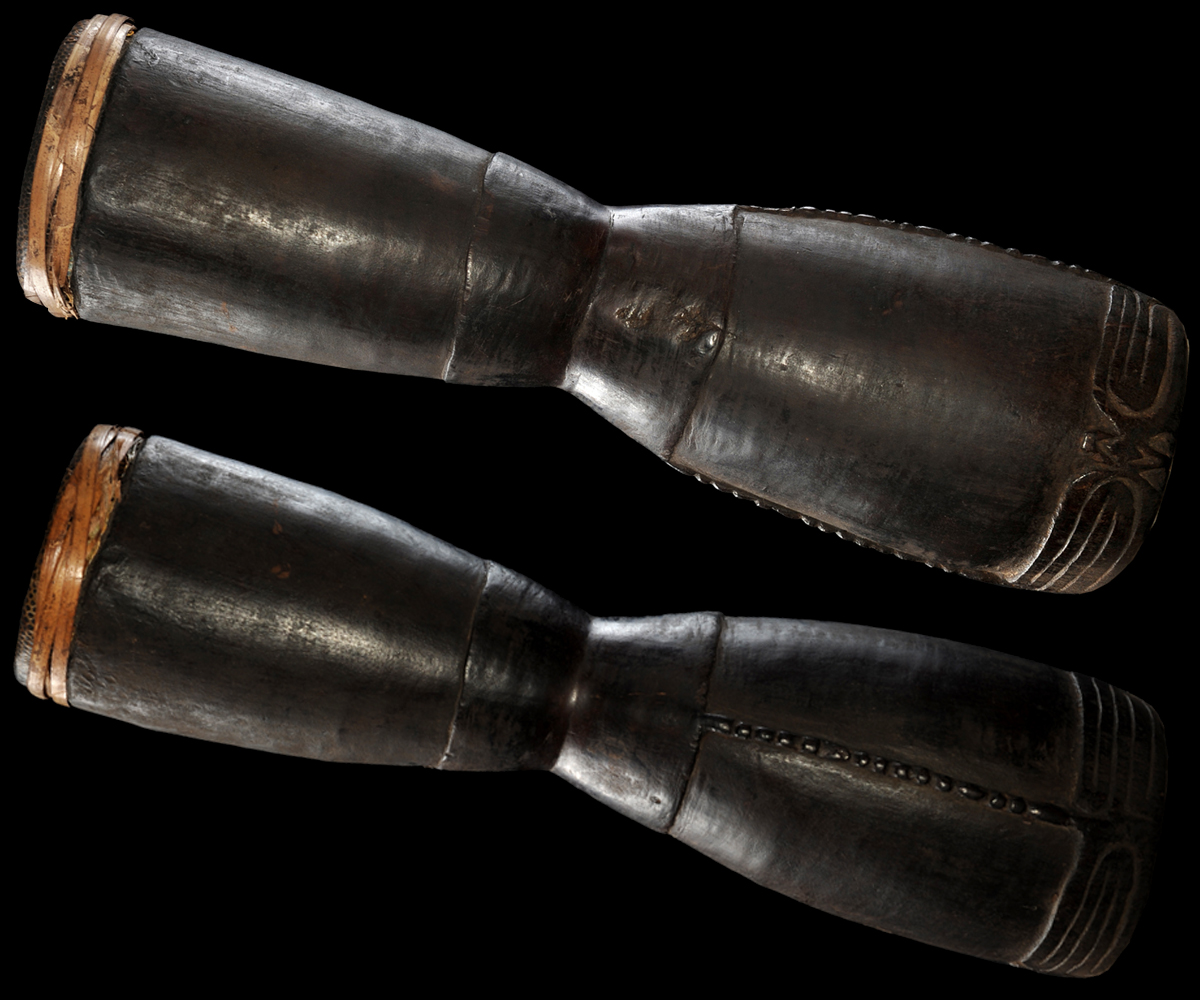
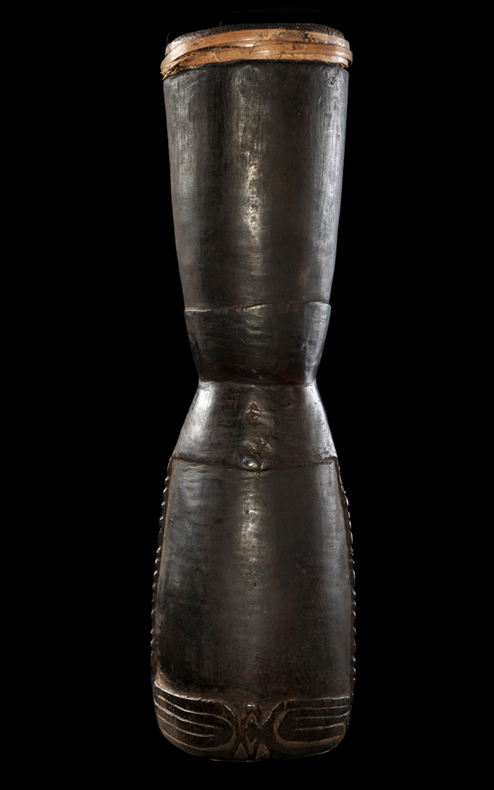
This kundu drum comes from Vokeo Island, also known as Wogeo, in the East Sepik Province of Papua New Guinea.
The drum body was carved from wood and hollowed by a controlled burning process, a traditional technique documented for kundu manufacture in New Guinea. The single drumhead is made from reptile skin and is secured around the upper rim. Its compact form allows the instrument to be held directly around the waist while the membrane is struck with the free hand.
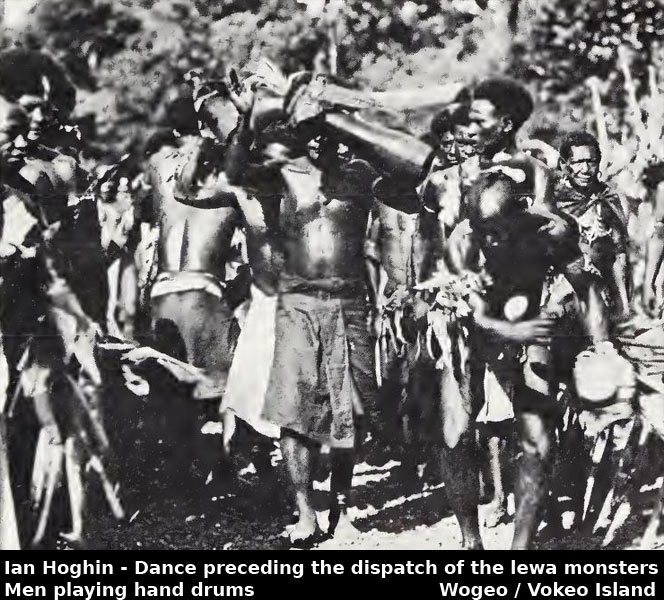
Ian Hogbin's ethnographic research among the Wogeo records the hand drum and slit gong as important percussion instruments in local musical life. They accompanied dancing and singing during communal gatherings, including trading and dancing parties. Hogbin also records the carving of new hand drums and slit gongs as a task considered particularly appropriate to men.
Source
“The pulsating of Wogeo percussion instruments, hand drum and slit gong, is to European ears less appealing than the plaintive call of a bamboo flute; but, coming over the foothills and along the beaches, it is to the people wildly exciting. The inhabitants of the other villages in the district find the steady thumping almost irresistible, and they would join in at once did not etiquette forbid their attendance on the first day.”
Ian Hogbin, The Island of Menstruating Men: Religion in Wogeo, New Guinea. Chandler Publishing Company, 1970.
Bibliography:
Ian Hogbin (1970):
The Island of Menstruating Men: Religion in Wogeo, New Guinea. Scranton, Pennsylvania: Chandler Publishing Company.
Ian Hogbin (1935):
Native Culture of Wogeo: Report of Field Work in New Guinea.
Oceania 5(3), pp. 308–337.
Barry Craig, Mark Busse & Soroi Eoe (2010):
Living Spirits with Fixed Abodes – The Masterpieces Exhibition. Papua New Guinea National Museum and Art Gallery.